
Sutika Paricharya: The Classical Postpartum Protocol
Here is something that should bother you: modern obstetrics can perform a caesarean section with extraordinary precision, yet in most hospitals, the mother is discharged within 48–72 hours with little more than a pamphlet on breastfeeding and a follow-up appointment in six weeks. What happens in those six weeks? That question — what the body needs in the critical window after delivery — was answered in remarkable detail over 2,000 years ago, in texts that most modern practitioners have never read. Childbirth is the single most depleting physiological experience a woman’s body can undergo. In the space of hours, the body loses blood, fluid, and tissue. The abdominal cavity that held a growing life is suddenly empty. Muscles, ligaments, and joints that stretched for months must now begin to contract. The hormonal landscape shifts more dramatically than at any other point in life. And through all of this, the mother is now responsible for nourishing another human being through her own body. Ayurveda recognised, thousands of years ago, that what happens in the weeks immediately following delivery determines not just how quickly a woman recovers, but how her health unfolds for years and decades afterward.
The classical texts describe a detailed postpartum recovery protocol called Sutika Paricharya. Charaka Samhita (Sharira Sthana, Chapter 8) discusses the postpartum state alongside the physiology of pregnancy. Sushruta Samhita (Sharira Sthana, Chapter 10) addresses post-delivery care within its broader surgical and obstetric framework. But it is Kashyapa Samhita that goes deepest — dedicating an entire section, the Sutika Sthana, exclusively to the care of the recently delivered mother. Sutika refers to the woman who has recently delivered. Paricharya means care, regimen, or protocol. Together, Sutika Paricharya is a comprehensive system of diet, rest, oil therapy, warmth, and lifestyle guidance designed to restore the mother’s depleted body to a state of balance. This is not a set of suggestions. In the classical framework, it is considered essential medicine — as critical as any treatment given during illness.
The Sutika period is traditionally defined as 42 days — six weeks — though some texts extend it to 90 days depending on the mother’s constitution and the difficulty of the delivery. During this window, the body is in its most vulnerable state. The doshas are massively disturbed. The Dhatus (tissues) are depleted. Agni (digestive fire) is extremely weak. Ojas — the essence of immunity and vitality — is at its lowest. Ayurveda considers this the most critical window for a woman’s long-term health. What is done during these 42 days can prevent chronic conditions that might otherwise emerge months or years later: persistent back pain, hormonal imbalance, digestive weakness, emotional vulnerability, and depleted immunity. What is neglected during this period can become the root of problems that no amount of later intervention fully resolves.
The principle is simple and profound: the body knows how to heal itself, but only if it is given the right conditions. Sutika Paricharya creates those conditions systematically — through food that rebuilds without overburdening weak digestion, through oil and warmth that pacify the aggravated Vata, through rest that allows tissue regeneration to proceed without interruption, and through routine that stabilises a nervous system shaken by the enormity of what has just occurred. Every element has a reason. Nothing is arbitrary.

What Happens to the Doshas After Delivery
Imagine a house after a storm. The roof is intact, but the windows are blown open, rain has soaked the floors, and the foundation is shaking. That is roughly what the doshic landscape looks like after delivery. Understanding this picture is the key to understanding why every single symptom a new mother experiences — the anxiety, the insomnia, the digestive problems, the joint pain, the emotional rawness — is not random. It is a predictable, mappable consequence of specific physiological disruptions. And once you see the map, the logic of the traditional recovery protocol becomes obvious.
Vata undergoes massive aggravation. Charaka describes this as the central doshic event of the postpartum period (Charaka Samhita, Sharira Sthana 8/48), and everything else follows from it. During delivery, there is enormous downward movement (Apana Vata) to expel the baby. The abdominal cavity, which was full and heavy, is suddenly empty — and empty space is the defining quality of Vata. There is significant blood and fluid loss, which increases the dry and light qualities. There is physical exhaustion and pain, both of which aggravate Vata. The nervous system has been through an overwhelming experience. Sleep deprivation begins almost immediately. Think of it this way: if even one of these factors occurred in isolation — significant blood loss, or sudden emptiness in a body cavity, or severe sleep deprivation — it would be enough to create noticeable Vata disturbance. In the postpartum mother, all of them converge simultaneously. It is a doshic perfect storm.
This Vata aggravation manifests in predictable ways: anxiety and emotional volatility that seem to come from nowhere, constipation, bloating and gas, difficulty sleeping even when the baby is sleeping, dry skin, joint pain and stiffness (particularly in the lower back and pelvis), sensitivity to cold and wind, scattered thinking, and a pervasive feeling of being ungrounded and overwhelmed. These are not character weaknesses or signs that a woman is not coping. They are the direct, predictable symptoms of massive Vata disturbance, and they respond to Vata-pacifying care with remarkable consistency.
Pitta is also involved, though secondarily. The inflammatory processes of tissue healing, the lochia (postpartum discharge), and the hormonal adjustments all carry Pitta characteristics. Some women experience Pitta-type symptoms: skin inflammation, excessive warmth, irritability that has a sharp edge rather than the scattered quality of Vata anxiety, and sensitivity in the digestive tract. The body is actively healing wounds — whether from a natural delivery or surgical — and healing is inherently a Pitta process.
Kapha, paradoxically, is depleted rather than aggravated. The nourishing, stabilising, lubricating qualities of Kapha have been drawn upon heavily during pregnancy to build the baby’s tissues, sustain the amniotic environment, and support the growth of the uterus and placenta. After delivery, these reserves are low. The breast milk production that begins immediately is another draw on Kapha resources — milk is a Kapha substance, requiring Kapha’s nourishing, building qualities. This Kapha depletion, combined with Vata aggravation, creates a body that feels simultaneously unstable and under-resourced — the nervous system is overstimulated while the tissues lack the nourishment to cope.
Agni — the digestive fire — is extremely weak after delivery. The physical trauma, the blood loss, the Vata aggravation, and the sheer energy expenditure of labour all contribute to a digestive system that cannot handle heavy, complex, or cold food. This is why the dietary protocol is so specific and so important: feeding the mother the wrong foods at this stage does not just cause discomfort. It creates Ama (metabolic toxins) at a time when the body has no reserve capacity to clear them, setting the stage for chronic problems.
Did You Know?
The Kashyapa Samhita describes 64 specific complications (Sutika Roga) that can arise from neglecting postpartum care — from joint disorders and digestive problems to emotional disturbances and chronic fatigue. This is not a vague warning. It is a catalogued list of conditions, with descriptions of each, documented over 2,000 years before modern obstetrics began studying postpartum complications systematically. The text even classifies which complications arise from dietary errors, which from premature activity, and which from emotional neglect — a diagnostic precision that modern postpartum medicine is only now beginning to match.
Diet During the Sutika Period
The dietary protocol during the Sutika period is not a set of preferences or general healthy eating guidelines. It is a carefully staged progression designed to match the recovering mother’s digestive capacity at each phase, rebuilding strength without overwhelming a weakened Agni. Think of it like restarting an engine that has been completely shut down. You do not floor the accelerator. You warm it gently, check the systems, and increase power gradually. The classical texts are remarkably specific about this progression, and the logic behind each stage is grounded in the understanding that digestion must be restored gradually — not forced. Charaka describes this staged dietary approach in the context of post-Panchakarma recovery (Charaka Samhita, Sutra Sthana 15/17–20), applying the same principle: after any major physiological depletion, the digestive system must be rebuilt through a sequence called Samsarjana Krama — the graduated reintroduction of food.
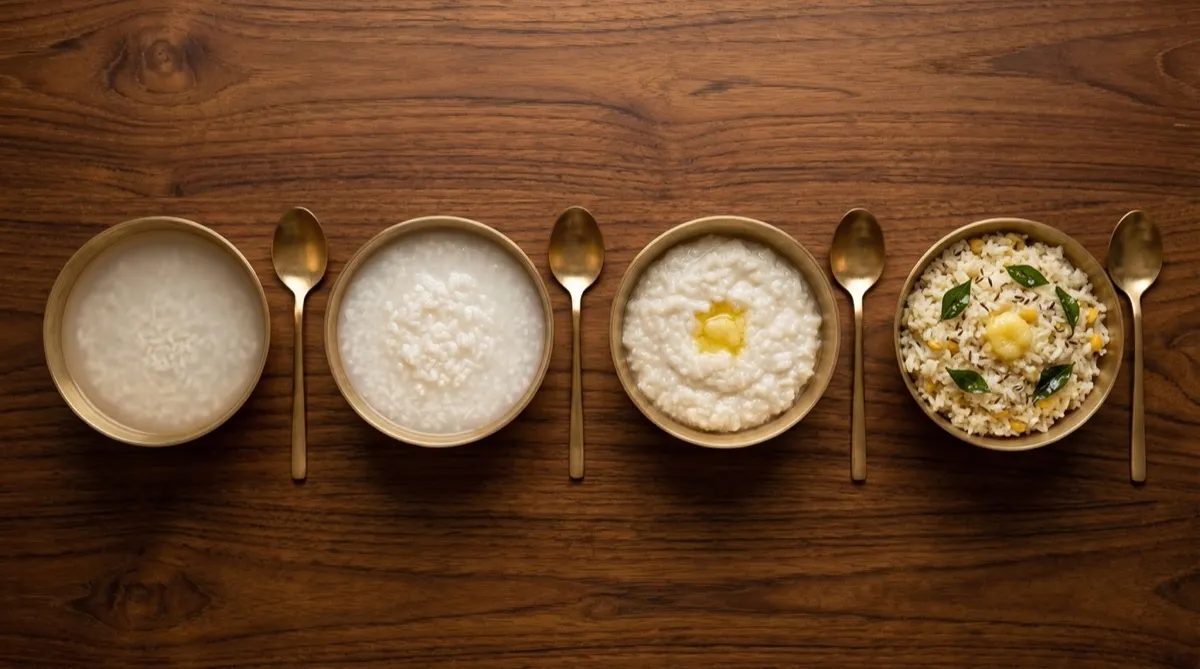
In the first few days after delivery, the emphasis is entirely on warm, liquid, and easily digestible preparations. Thin rice gruel (Peya) — essentially rice cooked with a large amount of water until it becomes almost a soup — is the starting point. This is food that requires almost no digestive effort, provides hydration, and begins to kindle Agni gently. Modern nutritional science has a parallel concept: the BRAT diet (bananas, rice, applesauce, toast) recommended after gastric illness follows the same logic of minimal digestive burden. But the Ayurvedic protocol is more sophisticated — it adds ghee in small quantities from the earliest stage, not as a luxury but as medicine. Ghee is the single most effective substance for pacifying Vata, nourishing depleted tissues, and supporting Agni simultaneously. Modern research on short-chain fatty acids, particularly butyrate (which ghee is rich in), increasingly supports this — butyrate nourishes the intestinal lining and supports gut barrier integrity, precisely what a depleted postpartum digestive system needs.
Over the following days and weeks, the diet progresses from liquid to semi-solid to solid. Thicker rice preparations replace the thin gruel. Cooked vegetables are gradually introduced. Dal and lentil soups appear as digestive strength returns. Each transition happens only when the mother’s digestion shows it is ready — clear hunger signals, comfortable digestion of the previous stage, and absence of bloating or heaviness. This is personalised medicine at its most fundamental: the protocol adapts to the individual body’s readiness signals, not to a calendar. Rushing this progression is one of the most common mistakes, and one that the texts specifically warn against.
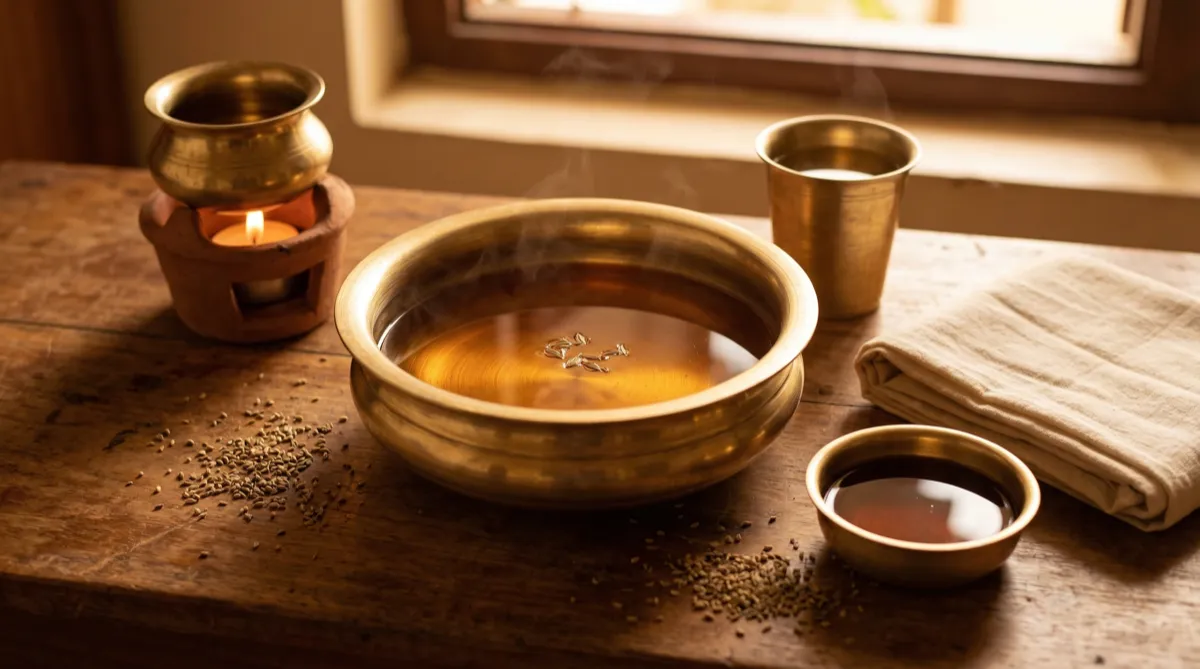
Specific kitchen ingredients play important roles throughout the Sutika period. Cumin (Jeeraka) is used extensively — in water, in cooking, in preparations — because it is one of the most effective digestive aids that is also safe and gentle enough for the postpartum period. Fenugreek (Methi) supports lactation and digestion. Turmeric supports the healing of tissues and has natural anti-inflammatory properties. Ginger, in small amounts, supports Agni. Black pepper, in minimal quantities, helps with digestion. These are kitchen ingredients, not medicines — but in the Ayurvedic framework, the distinction between food and medicine is often a matter of dose and intent rather than category.
What is avoided is equally important. Cold foods and drinks are strictly avoided because cold suppresses Agni, which is already critically weak. Raw foods — salads, raw fruits, smoothies — are avoided because they require strong digestive fire to process, which the postpartum mother does not have. Heavy foods — fried preparations, dense sweets, large quantities of meat — overburden the digestive system. Dry and rough foods aggravate the already-elevated Vata. Leftover or stale food increases Ama formation. The principle is consistent: everything that enters the mother’s body during this period should be warm, fresh, unctuous (containing healthy fats like ghee), light enough to digest easily, and nourishing enough to rebuild depleted tissues.
Did You Know?
The postpartum dietary progression described in classical Ayurvedic texts — starting with thin gruel and gradually increasing complexity over days — mirrors exactly what modern intensive care units do when restarting nutrition after major surgery or prolonged fasting. Called “enteral nutrition advancement” in ICU medicine, this protocol was standardised in the 1980s. Ayurvedic physicians were documenting the same staged approach — Peya (thin gruel), Vilepi (thick gruel), Akrita Yusha (plain lentil soup), Krita Yusha (seasoned lentil soup) — over two millennia earlier. The underlying physiological principle is identical: a weakened digestive system cannot safely handle complex food, and forcing it creates more problems than it solves.
Rest, Abhyanga, and the Importance of Warmth
Modern culture has an uncomfortable relationship with rest. There is an implicit pressure on new mothers to “bounce back” quickly — to return to pre-pregnancy weight, to resume normal activities, to demonstrate that motherhood has not slowed them down. This pressure is not just culturally misguided. From an Ayurvedic perspective, it is physiologically dangerous. The postpartum body is not a body that has finished a project and can now move on. It is a body in active recovery from a massive physiological event, and the quality of that recovery determines health outcomes for years to come.
Rest during the Sutika period is not a luxury. It is the primary therapeutic intervention. When the body rests, tissue regeneration proceeds at maximum efficiency. The Dhatus — the seven tissue layers that form the body’s structure — rebuild in a specific sequence: Rasa (plasma) first, then Rakta (blood), then Mamsa (muscle), and so on through Meda (fat), Asthi (bone), Majja (marrow), and finally Shukra/Artava (reproductive tissue). This cascade takes time. It cannot be rushed. And it can only proceed properly when the body’s energy is directed toward healing rather than being spent on external activities. The tradition of 40 days of rest exists across cultures — South Asian, Middle Eastern, East Asian, Latin American — not because these cultures independently invented an identical superstition, but because they independently observed the same biological reality.
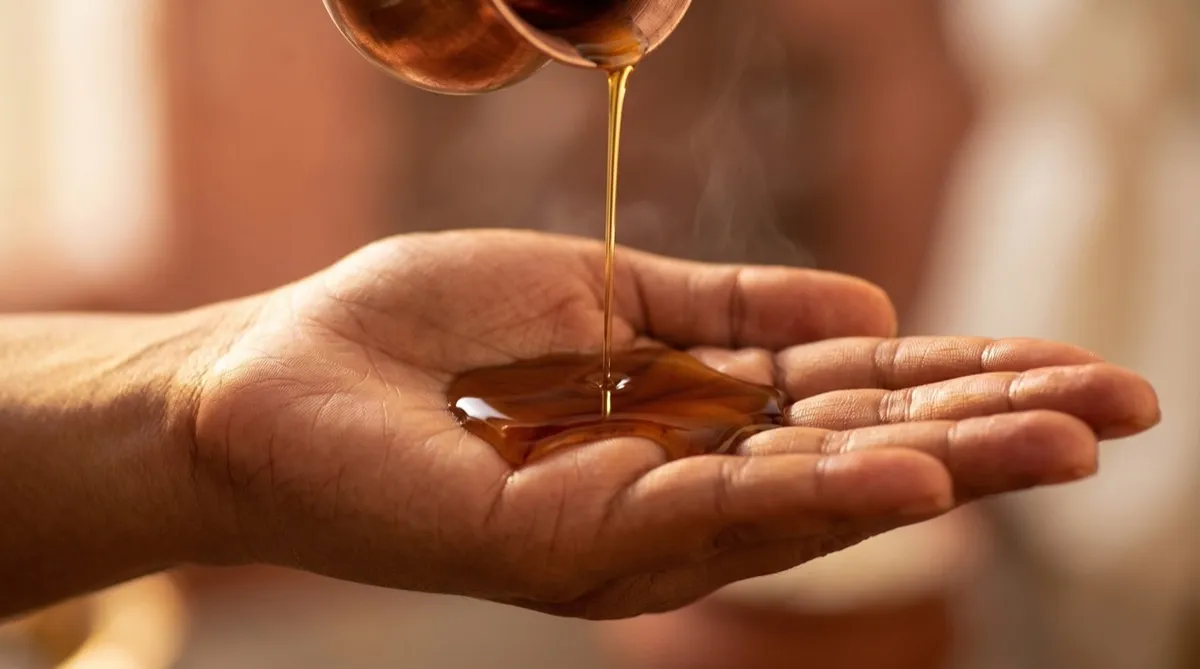
Abhyanga — oil massage — is one of the most important elements of postpartum care in Ayurveda, and arguably the one that modern science is most catching up to. Warm sesame oil or coconut oil (depending on the climate and the mother’s constitution) is applied to the entire body with gentle, rhythmic strokes. This is not massage in the deep-tissue therapeutic sense. It is the application of warm, heavy, stabilising oil to counter Vata’s dry, light, mobile qualities. Oil applied to the skin is absorbed and has systemic effects: it calms the nervous system, nourishes the skin and underlying tissues, supports joint flexibility during a period when joints are particularly vulnerable, and creates a profound sense of being held and grounded that directly addresses the emotional vulnerability of the postpartum period. Modern research on touch therapy confirms what Ayurveda documented thousands of years ago: gentle, rhythmic skin contact reduces cortisol levels, increases oxytocin, and activates the parasympathetic nervous system — precisely the physiological shifts a postpartum body needs.
Warmth is emphasised throughout the recovery period. The postpartum body, depleted and Vata-aggravated, is cold-sensitive in a way that goes beyond simple temperature preference. Warm food, warm oil, warm water for bathing, warm environments — all of these counteract Vata’s cold quality and support circulation, digestion, and tissue healing. Traditional practices include gentle abdominal binding (not tight compression, but supportive wrapping) that provides warmth, mild compression, and a sense of physical containment that helps the uterus return to its pre-pregnancy size while also providing comfort to the stretched abdominal wall.
Heavy exercise, vigorous walking, lifting, and physically demanding household tasks are all explicitly contraindicated during the Sutika period. This is not overprotectiveness. The pelvic floor, the abdominal muscles, the joints that were softened by pregnancy hormones — all of these need time to recover before being subjected to load. Ayurveda understood this not through anatomical dissection but through careful observation of what happened to women who resumed heavy physical activity too soon: prolapse, chronic back pain, persistent weakness, and recovery that never fully completed.
Did You Know?
The tradition of 40–42 days of postpartum rest exists independently across at least a dozen cultures worldwide: “Jaappa” in India, “Zuo Yuezi” (sitting the month) in China, “Sanhujori” in Korea, “La Cuarentena” in Latin America, and “Nifas” in Middle Eastern traditions. These cultures had no contact with each other when these practices developed. The consistent convergence on roughly the same duration — 40 to 42 days — strongly suggests they are all observing the same underlying biological recovery timeline. Modern uterine involution studies confirm that the uterus takes approximately 6 weeks to return to its pre-pregnancy size — precisely matching the traditional window.
Here is something remarkable that rarely makes it into postpartum conversations: human breast milk is not a static fluid. It is a living substance that changes its composition throughout the day. Morning milk contains higher cortisol to promote alertness. Evening milk contains more melatonin and tryptophan to promote sleep. The fat content varies within a single feeding session — foremilk is lighter and more hydrating, hindmilk is denser and more nourishing. The Ayurvedic classification of Stanya as an Upadhatu of Rasa Dhatu captures exactly this dynamic: it is not manufactured independently but is a living reflection of the mother’s digestive quality, emotional state, and constitutional balance at each moment. When the mother is calm and well-nourished, the milk reflects that. When she is stressed and depleted, the milk changes accordingly. The baby, in a very real sense, is drinking the mother’s entire state of being.
Lactation and Breastfeeding: The Stanya Connection
Here is one of the most elegant ideas in all of Ayurveda, and one that modern lactation science is only now beginning to validate. Breast milk — Stanya in Ayurvedic terminology — is classified as an Upadhatu (secondary tissue product) of Rasa Dhatu, the first and most fundamental tissue layer. Rasa Dhatu is formed directly from digested food through the action of Agni. This classification has profound practical implications: the quality of breast milk is directly determined by the quality of the mother’s digestion and the quality of the food she eats. There is no separation between the mother’s diet and the nourishment her baby receives. They are connected through a direct physiological pathway that runs from the mother’s plate through her Agni, through Rasa Dhatu formation, and into the composition of her milk. Modern metabolomics research has confirmed that breast milk composition changes measurably based on maternal diet — a finding that Ayurveda articulated as a foundational principle two millennia ago.
This is why the dietary protocol matters so much — not only for the mother’s recovery but for the baby’s nourishment. When the mother eats warm, well-cooked, ghee-rich food that is properly digested, the Rasa Dhatu formed is of high quality, and the Stanya produced from it is rich, nourishing, and appropriately balanced. When the mother eats cold, raw, difficult-to-digest food, or eats under stress, or eats irregularly, the Rasa Dhatu quality drops, and the milk reflects this — in quantity, in composition, and in its effect on the baby’s digestion and temperament.
Lactation challenges, viewed through this framework, are not random misfortunes. Low milk supply often indicates weak Agni and insufficient Rasa Dhatu production — the upstream supply is inadequate. The approach is not to force milk production through isolated interventions but to strengthen the entire chain: improve digestion, ensure the diet provides the right raw materials, reduce Vata aggravation that disrupts the flow, and ensure adequate rest so the tissue production cascade can complete. Fenugreek in cooking, cumin-infused water, and ghee-rich foods all support this process through their effects on Agni and Rasa Dhatu formation.
Dosha-specific challenges also emerge. A Vata-type mother may have adequate milk but inconsistent flow — supply that fluctuates with her stress levels, sleep quality, and routine consistency. The approach is Vata pacification: warmth, routine, oil, nourishment. A Pitta-type mother may have strong supply but milk that is too warm in quality, potentially causing skin reactions or digestive irritability in the baby. Cooling foods and a calm feeding environment address this. A Kapha-type mother may have rich, abundant milk but may experience heaviness, sluggish flow, or congestion. Gentle digestive spices and warm preparations support the flow. In each case, the approach is specific to the constitutional pattern — not a one-size-fits-all protocol.
Emotional Wellness After Delivery
A new mother sits in bed at 3 AM, feeding her baby. The house is quiet. Everything should feel peaceful. Instead, her heart is racing. She is convinced something is wrong with the baby, though she cannot identify what. Her mind cycles through catastrophic scenarios. She feels simultaneously exhausted and unable to sleep. She wants to cry but is not sure why. Tomorrow, someone will tell her to “enjoy every moment” and she will feel guilty that she cannot. This is not a character flaw. This is Vata. And Ayurveda mapped this territory with a precision that modern perinatal mental health research is still catching up to. Modern medicine frames postpartum emotional disturbance primarily through hormonal and neurochemical lenses. Ayurveda does not disagree with this, but it adds layers of understanding that make the picture clearer and the response more precise.
The massive Vata aggravation of the postpartum period directly affects the mind through Prana Vata — the subdosha that governs sensory processing, thought, and emotional response. When Prana Vata is disturbed, anxiety emerges that often has no specific object — a generalised sense that something is wrong, that you are not coping, that danger is imminent. Racing thoughts at 3 AM while feeding the baby. Hypersensitivity to sounds, lights, and stimuli. Difficulty making decisions. The feeling of being overwhelmed by tasks that would normally feel manageable. These are not signs of inadequacy. They are the predictable neurological consequences of extreme Vata aggravation in the mental channels.
Ojas depletion adds another dimension. Ojas — the substance that sustains immunity, emotional resilience, and a fundamental sense of wellbeing — is at its lowest after delivery. When Ojas is depleted, the emotional buffer that normally absorbs life’s impacts is thin. Things that would not have affected you before delivery now bring tears. Patience is short. The capacity to feel joy may be muted, replaced by a flat emotional landscape that does not match the expected happiness of new motherhood. This is not a personal failing. It is Ojas depletion manifesting in the emotional sphere, and it responds to the same interventions that rebuild Ojas in any other context: rest, nourishing food, warmth, oil, and time. For a deeper exploration of how Ayurveda understands emotional wellness through dosha pathways, see our article on Stress & Emotional Wellness in Ayurveda.
The importance of family support during the Sutika period cannot be overstated. In traditional practice, the postpartum mother is not expected to manage household tasks, cook, or care for older children. The family unit absorbs these responsibilities so that the mother can focus exclusively on recovery and bonding with the newborn. This is not pampering. It is recognition that the mother’s body has a specific job during these weeks — healing and feeding — and that diverting energy to other tasks compromises both. The modern reality, where many women lack this support structure, makes understanding the principles even more important: every bit of support that can be arranged, every task that can be delegated, every expectation that can be deferred, directly contributes to the quality of recovery.
Routine is particularly important for emotional stability in the postpartum period. While a newborn’s schedule is unpredictable, creating a loose structure around meals, oil application, rest periods, and feeding positions provides Vata with enough regularity to begin settling. The mother should not be pressured to “get back to normal” quickly. Normal has changed. The postpartum period is its own season of life, with its own rhythm, and resisting that rhythm — trying to maintain the pace of pre-pregnancy life — aggravates exactly the doshic patterns that cause emotional distress.
What Current Evidence Says
The World Health Organisation’s postnatal care recommendations (updated 2022) emphasise a minimum of six weeks of focused postnatal care, aligning closely with the traditional 42-day Sutika period described in classical Ayurvedic texts. WHO specifically recommends skin-to-skin contact, early and exclusive breastfeeding, delayed return to strenuous activity, and regular health check-ups during this window — priorities that mirror the classical Ayurvedic emphasis on warmth, lactation support, rest, and monitoring.
Research published in BMC Pregnancy and Childbirth has documented traditional postpartum practices across South Asian cultures, finding consistent themes of rest, warm foods, oil massage, and family support. Medical anthropologists studying these practices note that they address physiological recovery needs that modern obstetric care often under-emphasises, including tissue healing, hormonal adjustment, and the prevention of musculoskeletal complications through adequate rest.
Studies in the Journal of Midwifery & Women’s Health have found that early return to strenuous activity is associated with higher rates of pelvic floor dysfunction and urinary incontinence. The traditional emphasis on extended rest periods and gradual return to activity, practised across multiple cultures, is increasingly supported by evidence from physical therapy and rehabilitation research. The NCCIH (National Center for Complementary and Integrative Health) under NIH acknowledges traditional postpartum practices as areas of ongoing research interest.
This article is for educational purposes only and does not constitute medical advice. Postpartum recovery involves medical considerations that require professional oversight. Always consult your obstetrician, midwife, or qualified healthcare provider for medical concerns during the postpartum period. Ayurvedic postpartum care can be a meaningful complement to your medical care, but should not replace obstetric follow-up, particularly for conditions such as postpartum haemorrhage, infection, pre-eclampsia, or severe postpartum depression. If you are experiencing thoughts of self-harm or harm to your baby, seek immediate medical help.