
Your Liver Is Not a Filter. It Is a Factory.
You probably think of your liver as a filter. Something that catches bad stuff and lets good stuff through, like a coffee strainer for your blood. Ayurveda thinks of it differently. The liver is a factory — the most important factory in your body. And most people are running it on the wrong fuel, at the wrong temperature, with no maintenance schedule.
In Ayurveda, the liver is called Yakrit, and it is nothing less than the body’s central processing plant. It takes the raw material that your stomach and intestines have partially broken down and transforms it into something your body can actually use. It builds tissue. It colours your blood. It produces the bile that keeps your fat digestion running. It processes every chemical, every emotion, every late-night meal you throw at it. The question is not whether your liver is working. It is always working. The question is whether you are making its job impossibly hard.
This is what the ancient Ayurvedic physicians understood thousands of years ago, and it is what modern gastroenterology is only now catching up with: the liver does not just clean things. It builds things. And understanding your individual constitution (Prakriti) is the first step toward understanding what your liver specifically needs.
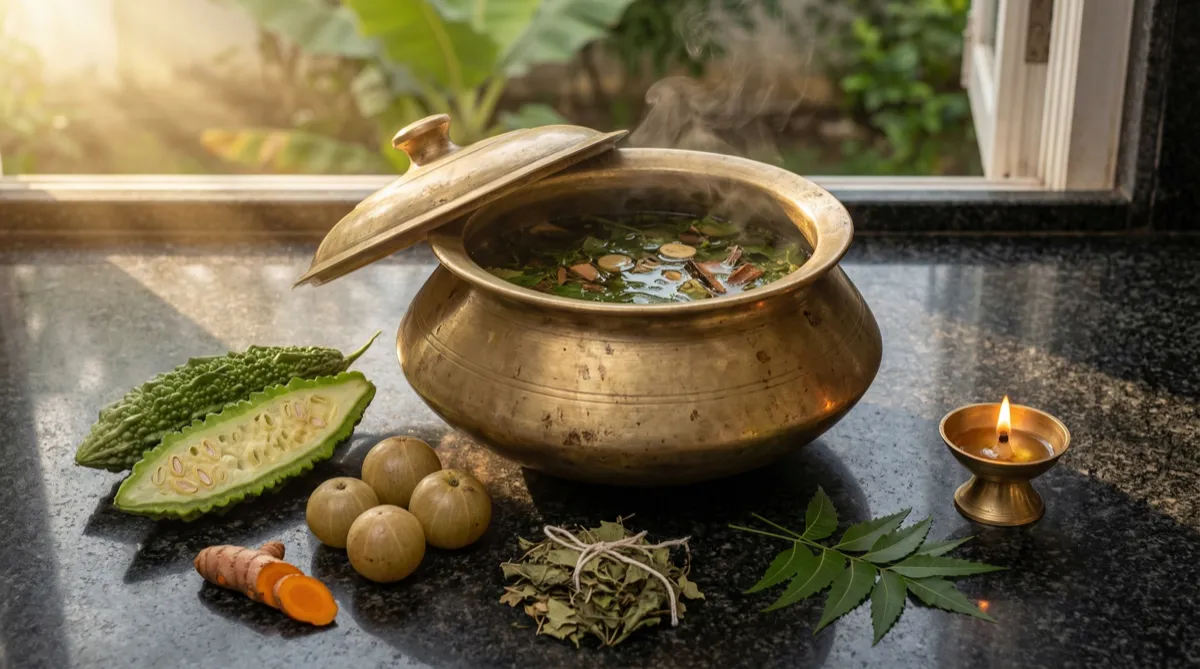
Your liver performs over 500 distinct biochemical functions every second you are alive. It is the only internal organ that can regenerate itself — lose up to 75% of it, and it will grow back to full size within weeks. The ancient Greek myth of Prometheus, whose liver was eaten by an eagle each day and regrew each night, encoded this biological fact as story. But here is what is truly extraordinary: Ayurveda, without any knowledge of Greek mythology, independently placed the liver at the centre of its metabolic framework and described it as the organ where raw material is continuously transformed into living tissue. Two civilisations, separated by thousands of miles, arrived at the same conclusion about the same organ for the same reason — because they were observing the same reality.
Yakrit: The Seat of Fire and Transformation
Here is where Ayurveda gets remarkably specific. The liver is identified as the primary seat of Ranjaka Pitta — the sub-type of Pitta dosha responsible for giving colour and life to blood. Ranjaka literally means “that which colours.” When Ranjaka Pitta is functioning well, your blood is rich, your complexion glows, and your energy is steady. When it is disturbed, things start to show up in ways you might not connect to your liver at all.
The liver’s role becomes even clearer when viewed through the lens of Srotas — the channel systems that carry nutrients, waste, and information throughout the body. Two Srotas are particularly relevant here. Annavaha Srotas, the channels of food and digestion, deliver partially processed material to the liver for further transformation. Raktavaha Srotas, the channels of blood, carry the finished product — healthy Rakta dhatu — out from the liver to nourish every tissue downstream. Sushruta describes Yakrit and Pleeha (liver and spleen) as the root origins (Mula) of Raktavaha Srotas (Sushruta Sharira Sthana 9), making the liver not merely a processing organ but the fountainhead of blood quality itself.
But Ranjaka Pitta is only part of the story. The liver also houses the five Bhuta Agnis — five elemental fires that correspond to earth, water, fire, air, and space. Think of them as five specialised departments inside the factory. Each Bhuta Agni takes a specific element from partially digested food and converts it into a form the body’s tissues can absorb. The earth-element fire converts earth-like qualities in food into the earth-like qualities your bones need. The water-element fire does the same for your plasma and fluids. And so on, across all five elements.
This is an extraordinary concept when you sit with it. Ayurveda is not just saying the liver processes food. It is saying the liver runs five simultaneous transformation processes, each handling a different elemental quality, and all of them need to be running at the right temperature. Too much heat and the processing is aggressive, incomplete, and inflammatory. Too little heat and the raw material piles up unprocessed. The classical texts in Charaka Samhita (Chikitsasthana 15) describe this with a precision that feels surprisingly modern. Ashtanga Hridaya (Sutra Sthana 12) further elaborates the five sub-types of Pitta — Pachaka, Ranjaka, Sadhaka, Alochaka, and Bhrajaka — placing Ranjaka squarely in the liver and establishing the liver’s role in colouring and enlivening the blood as a distinct physiological function.
Ranjaka Pitta and the Liver-Blood-Skin Connection
That yellowish tinge in your eyes? Those skin breakouts that will not quit? That irritability that shows up every afternoon around three o’clock? Your liver is sending you messages. And the messaging system, in Ayurvedic terms, runs through Rakta dhatu — the blood tissue.
Here is the chain: Ranjaka Pitta sits in the liver and is responsible for forming healthy Rakta dhatu (blood tissue). When Ranjaka Pitta is in balance, it produces clean, well-formed blood, and that blood nourishes every subsequent tissue in the body. Your skin gets its glow from healthy Rakta. Your muscle tone depends on it. Even your reproductive tissue quality is downstream of it. The classical sequence of tissue formation (Dhatu Parampara) means that if things go wrong at the liver and blood level, the effects cascade through the entire body.
When Ranjaka Pitta is aggravated, Rakta dhatu goes from nourishing to inflammatory. The blood runs hot, in Ayurvedic terms. And hot blood shows up on the surface: skin rashes, acne that clusters around the jawline and forehead, a reddish flush, inflammatory patches. It shows up in the eyes as yellowish discolouration or persistent redness. It shows up in digestion as acid reflux, burning after meals, and intolerance to anything fried or oily. These are not random symptoms. They are connected signals from the same source — an overheated factory.
The liver’s role in this chain has a purpose — it is building toward something. Every tissue that Ranjaka Pitta helps form is raw material for the next, and the chain does not stop until it reaches its final product: Ojas. You cannot isolate Ojas in a lab, but the concept is precise — it describes what the body produces when every stage of tissue formation has received clean, well-processed material from the stage before it. And that process begins with the liver. If Ranjaka Pitta is disturbed and Rakta dhatu is poorly formed, every downstream tissue inherits the deficiency. By the time the body reaches the final stages of refinement, there is simply not enough quality material left. This is why chronic liver imbalance does not stay contained to digestion. It shows up as declining stamina, weakened recovery from illness, and a general erosion of the body’s reserves. Support the liver, and you are protecting the entire chain that builds toward Ojas.
Did You Know?
Ayurveda described the liver performing five distinct transformations (Bhuta Agni) — one for each element. Remarkably, modern biochemistry has independently identified five major metabolic pathways in the liver: carbohydrate metabolism, lipid metabolism, protein metabolism, bilirubin processing, and drug/toxin biotransformation.
The Digestive-Liver Pathway
How food transforms into blood — the Ayurvedic sequence
Jatharagni
Digestive Fire
Food enters the stomach; Agni breaks it down into absorbable form
Ahara Rasa
Nutritive Essence
The first product of digestion — a nutrient-rich fluid ready for transformation
Ranjaka Pitta
In Yakrit (Liver)
Colours and transforms the nutritive essence, giving it life-sustaining qualities
Rasa Dhatu
Plasma / Nutrient Fluid
Nourished tissue fluid that circulates through the entire body
Rakta Dhatu
Blood Tissue
Further refined by liver function — healthy Rakta means healthy skin, energy, and vitality
Why “Liver Detox” Misses the Point Entirely
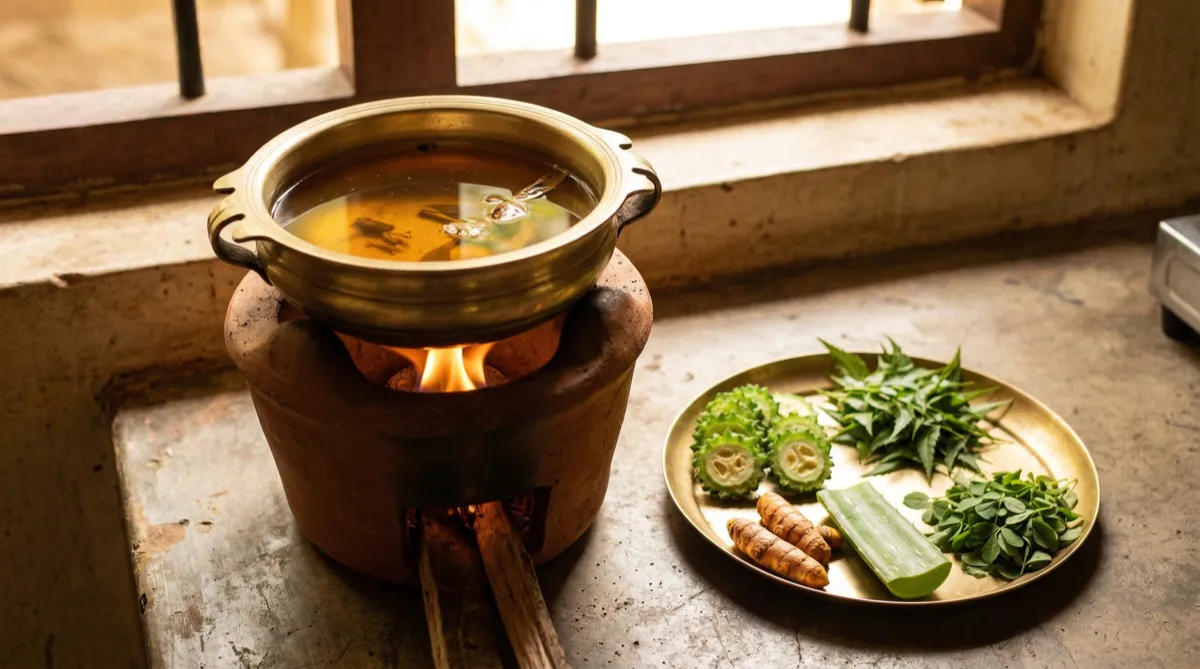
Let us address the elephant in the room. The wellness industry is full of liver detox cleanses, liver flush protocols, and seven-day liver reset programs. Juice fasts. Charcoal capsules. Lemon water first thing in the morning. They promise to “flush toxins” from your liver, as if your liver is a dirty sponge that needs wringing out.
Your liver is not a sponge. It does not accumulate toxins the way a sponge holds dirty water. It processes them. Continuously. Every minute of every day. The liver breaks down toxins, converts them into water-soluble compounds, and routes them out through bile and urine. That is its job, and it does it remarkably well — until you overwhelm its processing capacity.
Ayurveda understood this distinction long before the detox industry existed. The problem was never that the liver needed “cleaning.” The problem is that Pitta gets aggravated or Agni gets weak, and the factory’s processing capacity drops. The conveyor belt slows down. Half-processed material backs up. The solution is not to flush the factory with water and hope for the best. The solution is to support the fire that runs the factory, give it the right fuel, and let it run at the temperature it was designed for.
Support the fire, do not flush the factory. That is the Ayurvedic position, and it is a fundamentally more sophisticated understanding than anything a juice cleanse can offer.
Signs Your Liver Is Asking for Help
The liver does not send you a notification. It does not hurt in the way a sprained ankle hurts. Instead, it speaks through Pitta aggravation — and if you know what to look for, the signs are clear and consistent.
On the skin: persistent acne, rashes, hives, or eczema that worsens in summer. A burning or itching quality to skin complaints. Redness around the nose and cheeks. On the eyes: a yellowish tint to the whites, chronic redness, or sensitivity to bright light. In digestion: acid reflux, a burning sensation after meals, nausea around oily or heavy foods, and loose stools with a strong odour. In your mind: irritability that arrives predictably in the afternoon, a short temper, impatience, critical thinking that tips into harsh judgement.
Ayurveda also identifies subtler signs. A bitter or metallic taste in the mouth on waking. Excessive thirst. Body heat that runs high even in cool weather. A tendency toward inflammation — whether in the joints, the gut, or the skin — that suggests the body’s internal thermostat is set too high. These are not disconnected problems requiring five different specialists. They are one problem with one root: Pitta pushing the liver beyond its comfortable operating range.
The Alcohol, Processed Food, and Late-Night Eating Triple Threat
Modern life is remarkably efficient at burdening the liver in exactly the ways Ayurveda warns against. Consider the triple threat that defines how most urban adults eat: regular alcohol consumption, a diet heavy in processed and fried foods, and eating the largest meal of the day late at night. Each of these individually aggravates Ranjaka Pitta. Together, they are a sustained assault on the factory’s processing capacity. The Ayurvedic concept of Dinacharya (daily routine) addresses these patterns directly.
Alcohol is hot, sharp, and penetrating — all Pitta qualities. It demands immediate processing by the Bhuta Agnis, which diverts them from their normal work of transforming nutrients. The liver prioritises alcohol processing over everything else, and while it does so, other metabolic work backs up. This is not a moral judgement. It is thermodynamics. The factory has finite capacity, and alcohol jumps the queue.
Processed foods — high in refined oils, artificial additives, preservatives, and excess salt — present the Bhuta Agnis with material they were never designed to process. The elemental fire that converts natural fat into usable tissue struggles with hydrogenated vegetable oil. The fire that processes natural minerals is overwhelmed by synthetic preservatives. The result is what Ayurveda calls Ama: a sticky, heavy, incompletely processed residue that accumulates in the channels and tissues. The connection between Ama, Agni, and tissue quality is explored in depth in our article on Agni and digestion.
Late-night eating compounds the problem because the liver, like all Pitta organs, follows a circadian rhythm. Pitta time in Ayurveda runs from roughly 10 PM to 2 AM — this is when the liver does its deepest maintenance and processing work. If you eat at 10 PM, you are dumping raw material onto the factory floor at the exact moment the factory is supposed to be doing its maintenance shutdown. The processing is incomplete, the maintenance is disrupted, and you wake up with that heavy, foggy, unrested feeling that no amount of coffee fully resolves.
Your emotional state is not just “in your head” — it is in your liver. When you experience anger, your adrenal glands release cortisol, which the liver must metabolise. When you experience chronic frustration, the liver is processing a continuous stream of stress hormones on top of everything else it is already doing. This is not a metaphor. It is measurable biochemistry. The liver is the primary site of cortisol metabolism in the body. Ayurveda connected anger to Pitta and Pitta to the liver thousands of years before endocrinology confirmed the hormonal pathway. The insight was the same. Only the language was different.
Ayurvedic Practices That Actually Support the Liver
If flushing and detoxing miss the point, what does Ayurveda actually recommend? The answer is straightforward and remarkably practical: feed the factory the right fuel, run it at the right temperature, and give it a proper rest period.
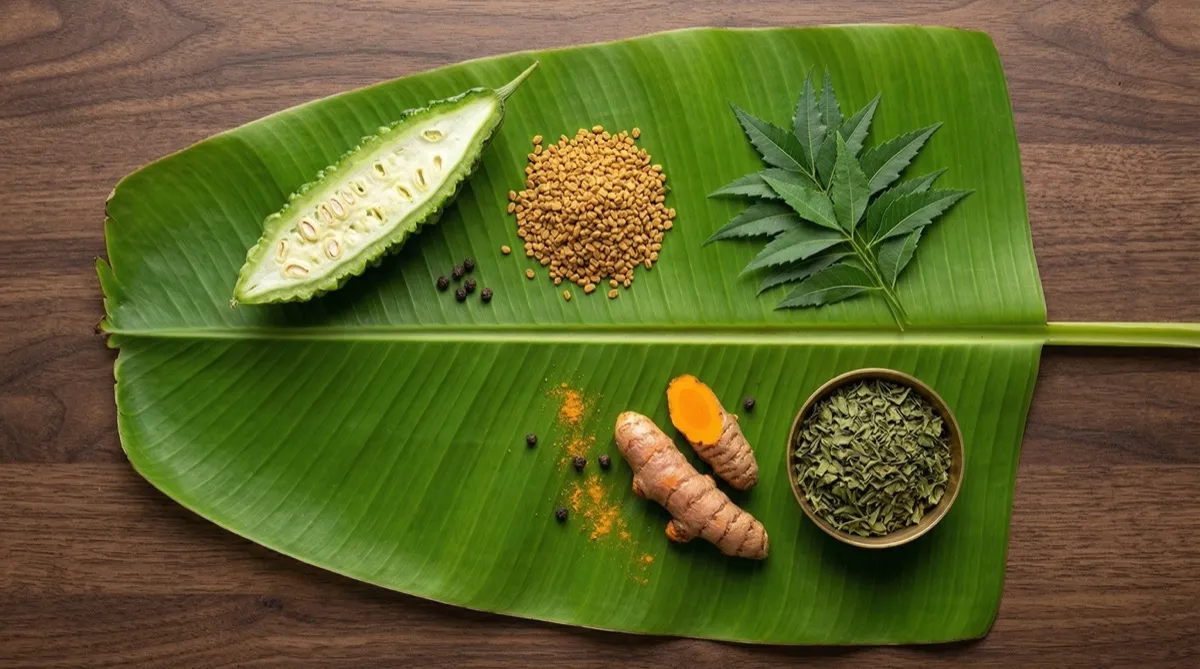
Start with taste. Ayurveda identifies six tastes (Shad Rasa) — Charaka devotes an entire chapter to their properties and effects (Charaka Sutra Sthana 26, Atreyabhadrakapyiya) — and the one most beneficial for the liver is Tikta, bitter. Bitter taste has a cooling, drying quality that directly pacifies Pitta. Many of these liver-supportive ingredients are everyday kitchen staples — bitter gourd (karela), fenugreek (methi), turmeric, and dark leafy greens like spinach and amaranth all carry Tikta rasa. There is a reason these foods feature so prominently in traditional Indian cooking. They are not there for flavour alone — they are there for the liver. Astringent taste (Kashaya rasa), found in pomegranate, unripe banana, and green lentils, offers similar Pitta-calming benefits.
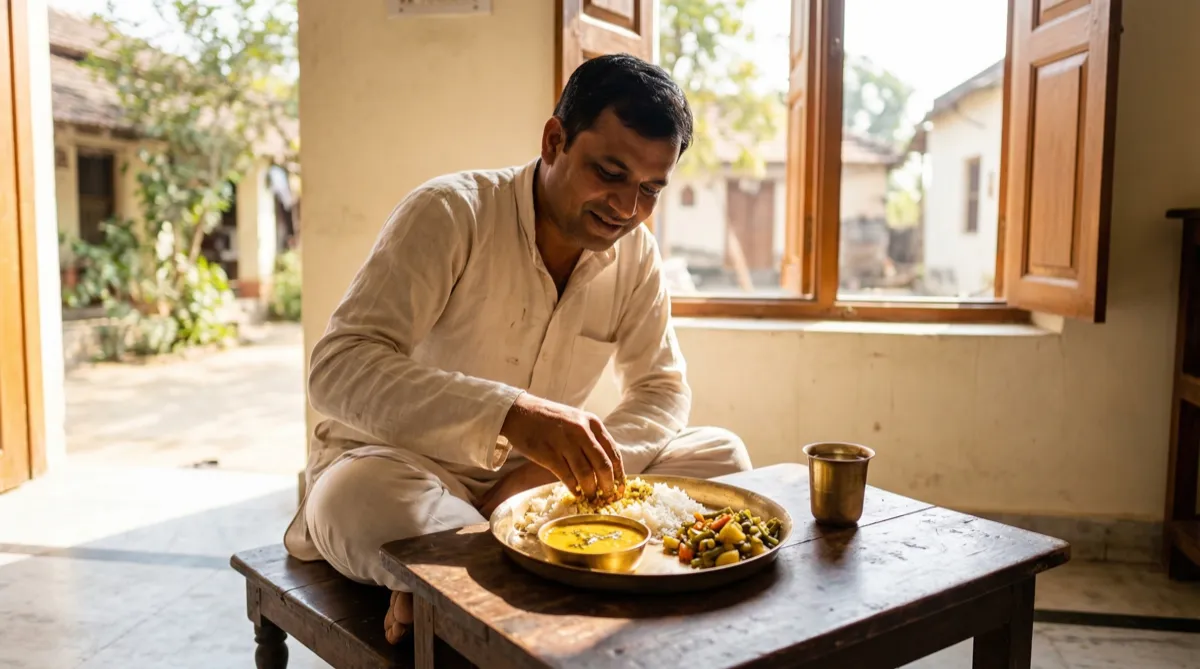
Meal timing matters enormously. The largest meal should be at midday, when Pitta and Agni are naturally strongest. Dinner should be light and early — ideally before 7 PM, and no later than 8 PM. This gives the liver a full rest period during the Pitta maintenance window from 10 PM to 2 AM. The traditional Ayurvedic daily routine (Dinacharya) structures the entire day around these natural rhythms, and the liver is one of the primary beneficiaries. For practical guidance on building these patterns into your daily meals and habits, our Diet & Lifestyle guide offers a step-by-step framework.
Seasonal considerations are equally important. Ritucharya (seasonal wellness) teaches that Pitta naturally accumulates in summer and early autumn. This is precisely when the liver is most vulnerable to overheating. Traditional practice calls for an emphasis on cooling foods, reduced intake of fermented and sour foods, and avoidance of excessive sun exposure during these months. The liver-supportive diet shifts with the seasons — not as a trendy “seasonal cleanse” but as a fundamental alignment with how the body’s internal fires rise and fall throughout the year.
Classical Ayurvedic texts describe several categories of herbs traditionally associated with liver support. These are cooling, bitter herbs that work by supporting Pitta balance and Bhuta Agni function rather than by “flushing” anything. However, herbal remedies should only be taken under the guidance of a qualified practitioner, as dosage, combination, and individual suitability matter significantly. What works for a Pitta-dominant constitution may be entirely wrong for someone with a Vata imbalance presenting with similar symptoms.
Did You Know?
Charaka classified bitter taste (Tikta rasa) as the most liver-protective of all six tastes. Modern hepatology research confirms that bitter compounds stimulate bile production and support hepatocyte regeneration — vindicating a dietary recommendation made over two millennia ago.
The Liver-Emotion Connection: Why Angry People Have Liver Problems
You have heard people say it: “He has a bad temper because of his liver.” Or the reverse: “All that anger is going to give him liver problems.” Most people treat this as folk wisdom — a quaint saying with no real basis. Ayurveda treats it as a clinical observation.
Pitta dosha governs both the liver and the emotions of intensity — ambition, drive, focus, but also anger, irritability, frustration, and harsh criticism. When Pitta is balanced, you get the sharp intellect, the clear decision-making, the focused drive. When Pitta is aggravated, that sharpness tips into cutting remarks, that drive becomes impatience, and that focus becomes an inability to let things go. The connection is not metaphorical. Pitta is one thing manifesting in two domains — physical and emotional — simultaneously.
This means that chronic anger and frustration are not just emotional problems to be managed with willpower. They are Pitta signs, and they indicate that the liver — Pitta’s primary seat — is running hot. Conversely, supporting the liver through diet, timing, and Pitta-balancing practices often has a noticeable effect on emotional steadiness. People report feeling calmer, less reactive, more patient. The factory cools down, and so does the temperament. This is why our clinical approach considers emotional patterns as part of a full individual assessment, not as a separate domain from digestive and liver wellness.
Did You Know?
The Ayurvedic observation that anger and irritability indicate liver imbalance is now supported by research on the gut-liver-brain axis. Studies show that hepatic inflammation can trigger neuropsychiatric symptoms including irritability and mood changes — exactly what Ayurveda has linked to Pitta aggravation for centuries.
Digestive Wellness and Hemorrhoids (Piles)
Ayurveda describes hemorrhoids as Arsha and considers them closely connected to digestive function and Agni (digestive fire). When digestion is consistently weak or irregular, the resulting strain on the lower digestive tract can contribute to discomfort. Ayurvedic tradition views this as an interconnected issue rather than an isolated one — supporting overall digestive wellness, including liver function and Pitta balance, is considered part of addressing the root factors.
Traditional dietary recommendations for supporting digestive comfort include adequate fibre from cooked vegetables and whole grains, sufficient water intake, and avoiding foods that are excessively dry, spicy, or difficult to digest. Regular meal timing and gentle movement are also emphasised. As with all health concerns, persistent symptoms should be evaluated by a physician for proper diagnosis and care.
What Current Evidence Says
Modern medicine recognises the liver as central to over 500 vital functions, including bile production, detoxification, protein synthesis, and nutrient storage. The connection between diet, lifestyle, and liver health is well established. Non-alcoholic fatty liver disease (NAFLD), for instance, is closely linked to dietary habits and metabolic health — areas where lifestyle modification is a key part of management.
Ayurveda offers a remarkably parallel framework for understanding fatty liver through the concept of Medo Dhatu (fat tissue) and its Dhatvagni. When Medo Dhatvagni — the metabolic fire responsible for processing and regulating fat tissue — is impaired, fat accumulates where it should not, including in the liver. The classical texts describe this as a Medo Dhatvagni Mandya (diminished fat-tissue fire), leading to excessive, poorly processed fat that obstructs the Srotas (channels) and compromises liver function. The parallels with the modern understanding of NAFLD — where metabolic dysfunction leads to hepatic fat accumulation — are striking. Both traditions point to the same root: not the fat itself, but the impaired capacity to process it.
Some herbs traditionally used in Ayurveda for liver support have been studied in modern research, with certain classical formulations investigated for their potential hepatoprotective properties and some preliminary studies showing promise. However, the National Center for Complementary and Integrative Health (NCCIH) emphasises that more rigorous clinical trials are needed before definitive conclusions can be drawn about most traditional liver-support herbs.
Jaundice, hepatitis, fatty liver, and other liver conditions are serious medical concerns that require proper diagnosis through blood tests, imaging, and clinical evaluation. Traditional Ayurvedic approaches to liver wellness may be considered as complementary practices alongside medical care, but they should never delay or replace necessary medical treatment.
This article is for educational purposes only and does not constitute medical advice. If you experience symptoms such as yellowing of the eyes or skin, persistent abdominal discomfort, unexplained fatigue, changes in urine or stool colour, or rectal bleeding, please consult your physician immediately for proper evaluation. Liver conditions, jaundice, and hemorrhoids require medical diagnosis. Traditional Ayurvedic approaches should complement — not replace — medical care. Always inform your healthcare provider about any herbal preparations or supplements you may be using.