
In 600 BCE, an Indian Surgeon Did Something the Rest of the World Wouldn't Figure Out for 2,400 Years
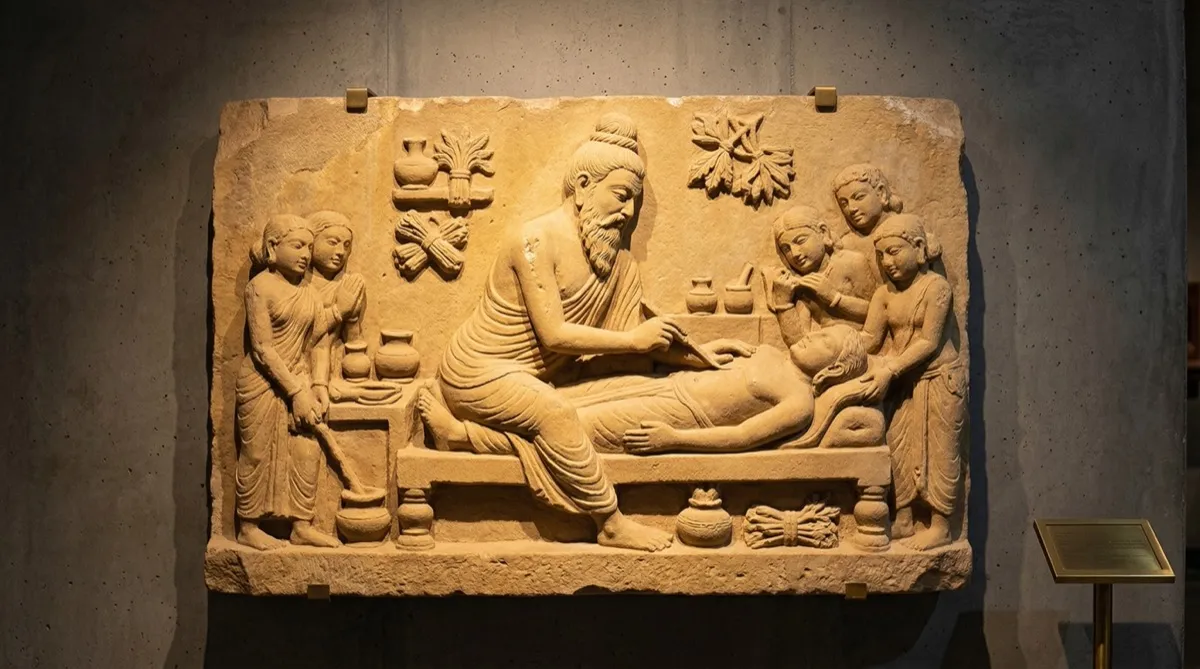
Around 600 BCE — while much of the world still treated illness with incantations — an Indian physician named Sushruta was performing rhinoplasty with 125 purpose-designed surgical instruments, wine as anaesthetic, and ant mandibles as biological staples. He described over 300 operations, classified fractures into twelve types, and created the first documented surgical training programme in history. In 1794, a British surgeon witnessed Indian practitioners in Pune using the exact same technique — his report in the Gentleman's Magazine launched plastic surgery in the West. The "Indian method" is still in surgical textbooks today.
But Sushruta was not a lone genius. He was a product of something much larger — a medical system called Ayurveda (Ayus: life + Veda: knowledge) that had been developing for centuries before him and would continue for millennia after. A system so comprehensive that it remains practised by millions today, more than 3,000 years after its foundational texts were composed. What follows is the story of where it came from, who carried it forward, and why modern science keeps circling back to what it already knew.
Did You Know?
Sushruta described 1,120 diseases, 700 medicinal plants, and 57 preparations based on animal sources. He also wrote one of the earliest known descriptions of diabetes (Madhumeha — "honey urine"), noting that ants are attracted to the urine of affected patients — an observational diagnostic test used in India for centuries. European physicians independently arrived at a similar method nearly two thousand years later.
Key Milestones in Ayurveda's History
From the earliest Vedic hymns to global recognition — seven thousand years of an unbroken healing tradition.
Earliest references in Rigveda and Atharvaveda. Healing knowledge passed orally through guru-shishya tradition.
Foundation text of internal medicine (Kayachikitsa). Systematic classification of diseases, herbs, and treatments.
Father of surgery. Documented 300+ surgical procedures, rhinoplasty, cataract surgery. Anatomy and dissection.
Vagbhata's synthesis of Charaka and Sushruta. Eight branches of Ayurveda codified. Most widely studied text today.
British colonial policies suppressed traditional medicine. Ayurveda pushed to margins but preserved by practitioners and families.
Ministry of AYUSH established. Global recognition grows. WHO traditional medicine strategy. Integration with modern healthcare.
Consider this: the same civilisation that produced Sushruta’s surgical techniques also produced the concept of zero, the decimal number system, the value of pi to four decimal places (Aryabhata, 499 CE), and the earliest known description of the heliocentric solar system (also Aryabhata). India was not a civilisation that happened to have good medicine. It was a civilisation operating at an intellectual level that produced breakthroughs across mathematics, astronomy, metallurgy, linguistics, and medicine simultaneously. Ayurveda was not an isolated achievement. It was one expression of a culture that had mastered the art of systematic observation and logical reasoning thousands of years before the European Enlightenment.
The Divine Thread: Shiva, the Saptarishis, and the Wisdom Before Time
Before the Vedas were written, before the first hymn was chanted, the tradition holds that this knowledge already existed — and its source is Shiva. In the Ayurvedic and Yogic traditions, Shiva is not simply a deity to be worshipped. He is Adi Yogi — the first yogi — and Adi Vaidya — the first physician. The two sciences that emerged from him — Yoga (the science of self-realisation) and Ayurveda (the science of life) — are considered twin disciplines, inseparable from their origin. You cannot fully practise one without understanding the other.
According to the tradition, Shiva transmitted this knowledge to the Saptarishis — the seven great sages: Atri, Bharadwaja, Gautama, Jamadagni, Kashyapa, Vasishtha, and Vishwamitra. These were not mythological figures in the way modern cultures understand myth. In Indian tradition, the Saptarishis are the original receivers and preservers of all Vedic knowledge. They did not invent what they taught — they received it, understood it through deep meditation and observation, and encoded it into the oral tradition that would eventually become the Vedas. Ayurveda, in this understanding, is not a human invention. It is a discovery — uncovered from the fabric of nature itself and passed forward through an unbroken chain of realised sages.
This is why one of the twelve Jyotirlingas — the most sacred Shiva temples in India — is called Vaidyanath: the Lord of Physicians. Located in Deoghar, Jharkhand, the Vaidyanath temple has been a place of healing pilgrimage for centuries. The name itself encodes the connection: Vaidya (physician) + Nath (lord). Shiva is revered not just as the destroyer and transformer, but as the original healer — the one who understood that true healing begins with confronting and transforming what is toxic.
This brings us back to the story of Halahala — the devastating poison that emerged during the churning of the cosmic ocean. When no one else could contain it, Shiva swallowed it. His throat turned blue, earning him the name Neelakantha — the blue-throated one. The meaning is not just mythological. It is clinical. The Agada Tantra branch of Ayurveda — toxicology — is dedicated to the study and treatment of poisons. The principle encoded in the Neelakantha story is the founding principle of this branch: a true healer must be willing to absorb and transform suffering, not avoid it. And healing cannot begin until what is toxic is identified and confronted.
Did You Know?
The connection between Shiva, Yoga, and Ayurveda is not symbolic — it is structural. Pranayama (breath control from Yoga), which tradition attributes to Shiva's teachings, is prescribed in Ayurvedic treatment for conditions ranging from anxiety to digestive disorders. The Chandogya Upanishad — one of the oldest — declares that Prana (breath/life-force) is the fundamental principle sustaining all life. Ayurveda built its understanding of Vata dosha and the vital breath directly on this Vedic insight. Two sciences, one source.
Dhanvantari: The Story Behind the Science
Every great tradition carries a foundational narrative — not fiction, but Itihasa: a Sanskrit word meaning "thus it happened." For Ayurveda, that narrative is the Samudra Manthan — the churning of the cosmic ocean — and understanding it reveals how Ayurveda thinks about healing at the deepest level.
The account describes the Devas and Asuras joining forces to churn the ocean of milk using Mount Mandara as the churning rod and Vasuki, the great serpent, as the rope. The churning was violent and exhausting. Before anything valuable appeared, Halahala emerged — a poison so devastating it could destroy all creation. Lord Shiva swallowed it to protect the world, and his throat turned blue. The meaning is direct: before healing comes, you must first confront what is toxic. There are no shortcuts.
From that same churning emerged Dhanvantari — radiant, holding a golden pot of Amrita (the nectar of life). He represents the foundational principle of Ayurveda: that the knowledge of healing is not invented but discovered. It exists within nature, within the body itself — waiting to be uncovered through effort, observation, and patience. Every Ayurvedic practitioner works within this understanding: they are not creating health. They are removing what obstructs the body's inherent capacity to heal itself.
Did You Know?
Dhanteras — celebrated two days before Diwali across India — is literally Dhanvantari Trayodashi, the day Dhanvantari is believed to have emerged from the ocean. Millions of families light lamps and pray for health. It is one of the oldest continuously observed health-related traditions on Earth. The Indian government recognised this by declaring Dhanvantari Trayodashi as National Ayurveda Day in 2016.
Before Writing, Before History: The Archaeological Evidence
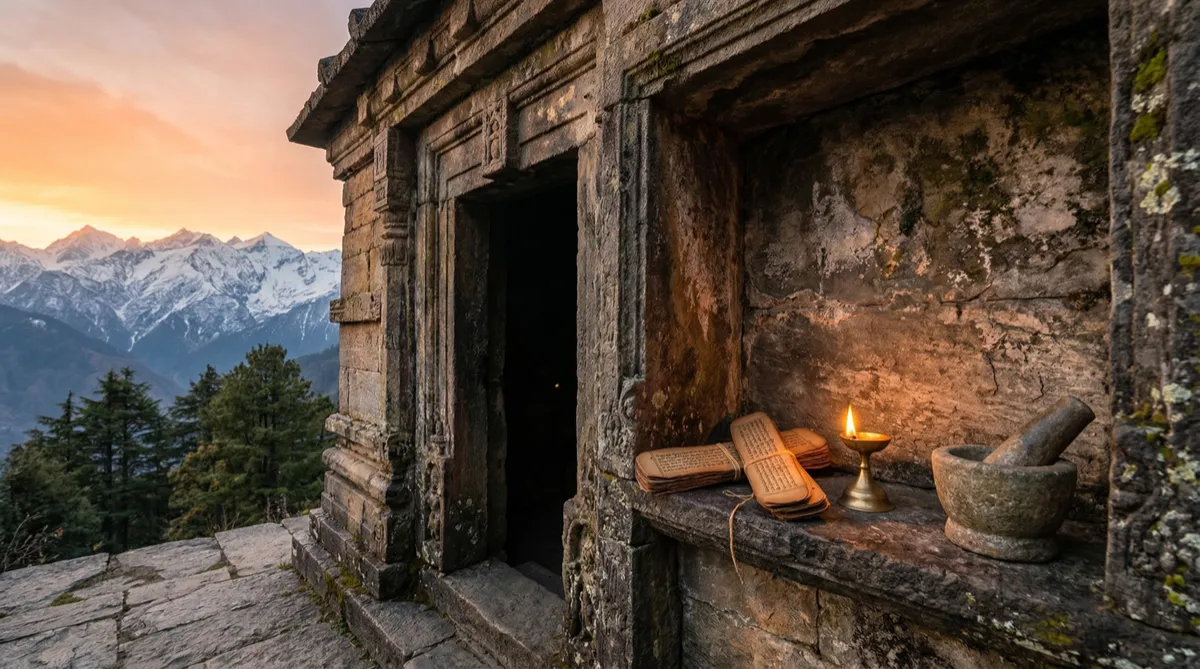
The divine narratives speak of origins beyond time. But there is also physical evidence — carved in bone, baked in clay, buried in the earth. Archaeological excavations have pushed the origins of organised medicine on the Indian subcontinent back to a period so ancient that it challenges the way we think about “primitive” civilisations.
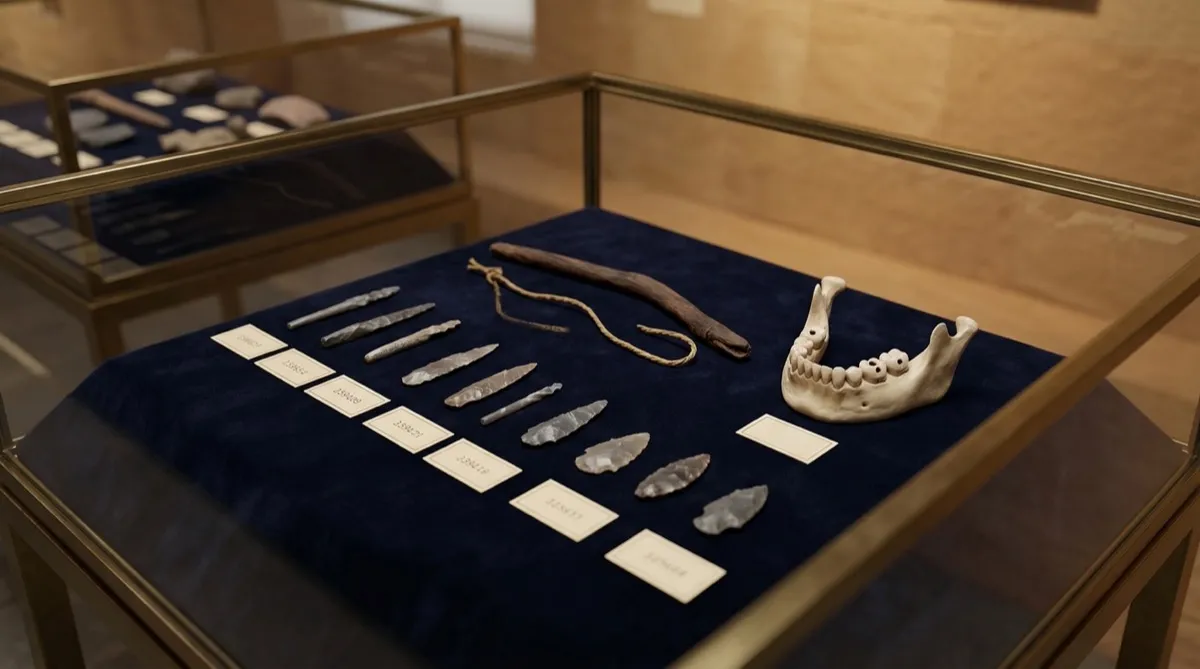
At Mehrgarh, in present-day Balochistan, archaeologists discovered evidence of dental surgery dating to approximately 7000 BCE — nine thousand years ago. Eleven drilled molar crowns were found in a Neolithic burial site, showing precise, intentional drilling into living teeth. This was not accidental damage. The drill marks show consistent technique and purpose. These are the oldest known examples of dental surgery in human history — performed roughly 4,000 years before the first Vedic hymns were composed, and 5,000 years before the Egyptians built their pyramids.
The Indus Valley Civilisation (circa 3300–1300 BCE) — one of the world's three earliest urban civilisations, alongside Mesopotamia and Egypt — reveals an even more sophisticated picture. Mohenjo-daro and Harappa had underground drainage systems, public bathhouses, private toilets connected to covered sewers, and waste management systems that most European cities would not achieve until the 19th century. This was not a civilisation that stumbled into hygiene by accident. It was a civilisation that understood the relationship between sanitation and health at a level that took the rest of the world five thousand years to match.
Terracotta figurines from these sites depict yoga postures. Seals show medicinal plants. Residue analysis of pottery has identified traces of turmeric and ginger — the same kitchen staples that Ayurveda would later codify as essential to daily health. The Indus Valley people were already living by principles that the Vedas would eventually formalise into a written system. Ayurveda did not appear out of nowhere. It was the culmination of thousands of years of accumulated medical wisdom, stretching back to the very dawn of human civilisation on the subcontinent.
The Vedic Roots: Older Than You Think
The Vedas are the oldest surviving texts of human civilisation — composed roughly between 1500 and 500 BCE, though the oral tradition they record is almost certainly much older. There are four Vedas: Rigveda, Yajurveda, Samaveda, and Atharvaveda. Ayurveda is traditionally classified as an Upaveda (subsidiary knowledge) of the Atharvaveda, but its threads run through all four.
The Rigveda — the oldest of the four, composed perhaps 3,500 years ago — already contains hymns to the Ashvini Kumaras, the divine twin physicians who are described as healing the blind, restoring limbs, and rejuvenating the aged. These are not casual references. The Rigveda contains over 60 hymns mentioning medicinal herbs, healing waters, and the therapeutic power of sunlight. There are references to over a thousand healing plants. This was a civilisation that was already thinking systematically about health.
But it is the Atharvaveda that represents the real foundation. Of its roughly 6,000 verses, nearly 2,000 deal directly with disease, healing, anatomy, and medicinal plants. It describes fever, cough, wounds, fractures, heart conditions, jaundice, and mental disturbances — and offers specific herbal remedies for each. It contains the earliest known descriptions of what we now call infectious disease theory: the idea that certain illnesses can be transmitted from one person to another through invisible agents. This was more than two thousand years before the germ theory of disease emerged in Europe.
The Upanishads — the philosophical texts that emerged from the Vedic tradition — added another layer. They introduced the concept of the Pancha Kosha, the five sheaths of human existence: the physical body (Annamaya), the breath-energy body (Pranamaya), the mind (Manomaya), the intellect (Vijnanamaya), and the bliss body (Anandamaya). This is not abstract philosophy — it is a clinical framework. It tells the practitioner that disease can originate at any of these five levels, and that treating only the physical body while ignoring the breath, mind, or emotional state is incomplete medicine. Modern integrative medicine is only now beginning to recognise what the Upanishads articulated thousands of years ago.
The Chain of Transmission: How Knowledge Moved Through Time
Charaka Samhita — the most authoritative surviving Ayurvedic text — opens with a remarkable narrative. It describes how the knowledge of Ayurveda was transmitted in an unbroken chain: from Brahma (the creator) to Daksha Prajapati, then to the Ashvini Kumaras, then to Indra. When disease began to afflict humanity and interfere with their pursuit of dharma (righteous living), a group of sages gathered in the Himalayas and selected Bharadwaja to approach Indra and learn the science of life. Bharadwaja brought it back and taught it to Atreya Punarvasu, who in turn taught it to six disciples — the most distinguished being Agnivesha, whose teachings Charaka later compiled and refined.
Why does this matter? Because it tells you something about how Ayurveda understood itself. This was not knowledge that belonged to any individual. It was not a proprietary discovery. It was a shared inheritance — received, refined, and passed forward through generations of teachers and students. The word for this is Parampara: an unbroken chain of transmitted knowledge. Every practitioner who has ever studied Ayurveda sits somewhere on this chain. The knowledge in their hands was held by hands before them, and will be held by hands after them.
Ayurveda in the Great Epics: From the Ramayana to the Mahabharata
The two great Indian epics — the Ramayana and the Mahabharata — are not just stories. They are Itihasa: "thus it happened." And both contain detailed references to Ayurvedic knowledge that reveal how deeply this medical science was woven into the fabric of ancient Indian civilisation. These are not passing mentions. They are plot-critical moments that assume the audience already understands how Ayurveda works.
The most dramatic medical episode in all of Indian literature occurs in the Ramayana, during the battle in Lanka. When Lakshmana — Lord Rama's brother — is struck by the Shakti weapon of Indrajit (Ravana's son) and collapses on the battlefield, the entire army falls into despair. The physician Sushena examines Lakshmana and prescribes one specific herb: Sanjeevani — the herb that can restore life itself. But Sanjeevani grows only on Dronagiri, a mountain in the Himalayas, thousands of miles away from the battlefield in Lanka (present-day Sri Lanka).
Hanuman flies to the Himalayas. When he reaches Dronagiri, he cannot identify the specific herb among the thousands of medicinal plants growing there. Rather than return empty-handed and risk Lakshmana's life, Hanuman uproots the entire mountain and carries it back through the sky to Lanka. Lakshmana is revived. The army continues the battle.
Think about what this story reveals. It assumes a civilisation that already understood: that specific herbs have specific healing properties, that the Himalayas are a vast repository of medicinal plants, that botanical identification requires expert knowledge, and that the right herb administered at the right time can mean the difference between life and death. This is not generic folk healing. This is a civilisation with a sophisticated pharmacological framework — and the Ramayana treats it as common knowledge that the audience already takes for granted.
Did You Know?
The Himalayas remain one of the richest repositories of medicinal plants on Earth. Over 8,000 species of medicinal plants have been documented in the Himalayan region, many of which are found in Ayurvedic formulations prescribed to this day. The Indian government's National Medicinal Plants Board continues to catalogue and protect these resources. The Sanjeevani story was not fantasy — it pointed to a real geographical fact that modern botany has thoroughly confirmed.
The Mahabharata is equally revealing. In the Bhagavad Gita — Chapter 17 — Lord Krishna classifies all food into three categories: Sattvic (pure, nourishing, promoting clarity), Rajasic (stimulating, agitating, promoting restlessness), and Tamasic (stale, heavy, promoting lethargy and dullness). This is not abstract philosophy. This is the exact nutritional classification framework that Ayurveda uses to this day when prescribing diet for patients. Every Ayurvedic practitioner assesses food through this lens. The Gita did not invent it — it reflected what was already established practice.
The Mahabharata also contains references to Ashva Ayurveda — the Ayurvedic treatment of horses — and Vriksha Ayurveda — the Ayurvedic treatment of plants and trees. This tells you something remarkable: by the time of the Mahabharata, Ayurveda had expanded beyond human medicine into veterinary science and agricultural science. The understanding of life, balance, and healing was applied across all living systems — a holistic vision that modern One Health approaches are only now beginning to embrace.

The human body is approximately 72% water. The Earth’s surface is approximately 71% water. The human body maintains a core temperature of 37°C. The average temperature of the Earth’s surface is approximately 15°C — but the temperature at which water has its maximum density is 4°C, and the temperature at which biological enzymes function optimally clusters around 37°C. These are not coincidences that the ancient sages overlooked. The Vedic concept of “Yatha Pinde Tatha Brahmande” — as is the microcosm, so is the macrocosm — was not mysticism. It was pattern recognition at the deepest level. The body mirrors the planet because it was built by the same elements, shaped by the same forces, and governed by the same cycles. This is the insight from which Panchamahabhuta theory and the entire framework of Ayurveda emerged.
The Brihat Trayi: Three Texts That Built a Medical System
Sushruta did not work alone. His Sushruta Samhita is one of three foundational texts — the Brihat Trayi, or "Great Triad" — that together form the most comprehensive medical system the ancient world ever produced. The fact that all three survive intact, are still studied, and are still clinically applied today is something no other ancient medical tradition can claim.
Charaka Samhita (compiled approximately 300 BCE, based on far older oral teachings) is the foundational text of Ayurvedic internal medicine — Kaya Chikitsa. It contains 120 chapters in eight sections. But what separates Charaka from every other ancient medical text is the reasoning. Charaka does not simply list remedies. He explains why a disease develops — at the level of Agni (digestive fire) and dosha — how to differentiate it from similar conditions, and how to tailor treatment to the individual patient's constitution (Prakriti). This is personalised medicine — the concept that modern genomics is only now rediscovering — articulated 2,300 years ago.
Between them, Charaka (internal medicine) and Sushruta (surgery) covered essentially the entire scope of clinical practice. Charaka's approach to differential diagnosis — systematically ruling out conditions based on symptom patterns, pulse, and constitution — is structurally identical to what medical students learn today. The difference is that he did it without lab tests, imaging, or instruments. He had only his senses, his training, and a framework of clinical reasoning so robust that it produced accurate results for thousands of years.
Ashtanga Hridaya by Vagbhata (approximately 7th century CE) synthesised both Charaka and Sushruta into a single, more accessible volume. It was translated into Arabic, Tibetan, and Chinese, becoming the most widely used Ayurvedic textbook across Asia. Its chapters on seasonal wellness, daily routines, and dietary principles continue to shape clinical practice today. When Tibetan medicine, Unani medicine, and traditional Chinese medicine show structural similarities to Ayurveda, Vagbhata's text is often the connecting thread.
Did You Know?
Charaka Samhita contains what may be the oldest documented code of medical ethics. It describes the physician's duty to the patient, the importance of confidentiality, the obligation to treat regardless of social status, and the principle that a doctor should never abandon a patient. These ethical standards predate the Hippocratic Oath by several centuries.
The Eight Branches: Medical Specialisation 2,500 Years Ago
Here is something that should give every modern physician pause. By the time the Brihat Trayi was compiled, Ayurveda had already organised itself into eight distinct branches of medical specialisation — the Ashtanga (eight limbs) — each with its own diagnostic methods, treatment protocols, and clinical literature. This was not a generalised folk healing tradition. This was a fully differentiated medical system with specialist fields:
- Kaya Chikitsa (Internal Medicine) — the treatment of systemic diseases originating from impaired digestion and metabolic function. This is the largest branch and the one most people think of as “Ayurveda.”
- Shalya Tantra (Surgery) — Sushruta’s domain. Surgical procedures, instrument design, wound management, and the removal of foreign bodies.
- Shalakya Tantra (Diseases of the Head, Eyes, Ears, Nose, and Throat) — essentially ancient ENT and ophthalmology. Sushruta’s cataract surgery falls here.
- Kaumara Bhritya (Paediatrics and Obstetrics) — dedicated to the care of children, pregnant women, and nursing mothers. It covered nutrition, childhood diseases, and developmental milestones.
- Agada Tantra (Toxicology) — the study and treatment of poisoning from plants, animals, minerals, and environmental toxins. It included forensic toxicology — identifying how and when a person was poisoned.
- Bhuta Vidya (Psychiatry and Psychosomatic Medicine) — the treatment of mental disturbances, behavioural disorders, and conditions attributed to unseen causes. This included what we would today recognise as anxiety, depression, psychosis, and seizure disorders — approached through counselling, meditation, herbal protocols, and lifestyle modification.
- Rasayana (Rejuvenation and Longevity Science) — systematic protocols for rebuilding tissue quality, strengthening immunity, and extending healthy lifespan. Not anti-ageing quackery — clinical rejuvenation based on tissue-layer nourishment.
- Vajikarana (Reproductive Medicine and Vitality) — dedicated to reproductive health, fertility, and the quality of reproductive tissues in both men and women.
Consider what this means. Twenty-five centuries ago — while most of the world's healing traditions were generalised, undifferentiated practices — Ayurveda had already developed the concept that medicine needs specialist branches. It had a dedicated psychiatry branch. It had a separate toxicology discipline. It had formalised paediatrics as its own field. Modern medicine would not develop equivalent specialisations until the 18th and 19th centuries. Ayurveda did not merely treat disease — it built a complete medical infrastructure.
Did You Know?
Bhuta Vidya — Ayurveda's psychiatry branch — described conditions that map remarkably closely to modern diagnostic categories: Unmada (psychosis), Apasmara (epilepsy), Atattvabhinivesha (obsessive disorders), and various forms of depression and anxiety. Treatments included counselling (Sattvavajaya), meditation, dietary modification, and specific herbal formulations — a multi-modal approach that modern psychiatry is only now embracing as "integrative mental health care."
Takshashila and Nalanda: Where Ayurveda Was Taught
Ayurveda was not just a body of texts — it was a living educational tradition. Two ancient universities played a central role in its development and dissemination. Takshashila (Taxila), located in what is now Pakistan, was one of the world's earliest centres of higher learning, active from at least the 7th century BCE. Students from across the subcontinent and beyond — including, according to tradition, Jivaka, the personal physician of the Buddha — studied Ayurveda here alongside mathematics, astronomy, law, and military strategy. Atreya, the great teacher whose lectures form the basis of Charaka Samhita, is believed to have taught at Takshashila.
Nalanda, the great Buddhist university in Bihar, flourished from the 5th to the 12th century CE and housed thousands of students and teachers. Chinese traveller Xuanzang, who studied there in the 7th century, documented extensive medical studies as part of the curriculum. Ayurveda at Nalanda was not taught in isolation — it was studied alongside philosophy, logic, grammar, and meditation. This interdisciplinary approach shaped the Ayurvedic understanding that health cannot be separated from how a person thinks, lives, and relates to the world around them.
How Ayurveda Shaped the World
The influence of Ayurveda extends far beyond the Indian subcontinent — though this is one of the least-known chapters of medical history. When Alexander the Great's physicians encountered Indian healers in the 4th century BCE, they documented herbal remedies and surgical techniques that were unknown in Greece. Through trade routes and cultural exchange, Ayurvedic concepts of constitutional medicine, dietary therapy, and herbal pharmacology influenced Greek, Persian, and eventually Arabic medical traditions.
Unani medicine — the Greco-Arabic medical system still practiced across South Asia and the Middle East — owes a significant debt to Ayurvedic pharmacology. Tibetan medicine (Sowa Rigpa) explicitly acknowledges Vagbhata's Ashtanga Hridaya as one of its foundational texts. When Buddhist monks travelled the Silk Road carrying scriptures, they also carried medical knowledge — and Ayurvedic concepts of pulse diagnosis, constitutional types, and seasonal living entered Chinese, Japanese, and Southeast Asian healing traditions.
The full scope of this influence is still being mapped by historians. What is clear is that Ayurveda was not a local folk tradition — it was a sophisticated medical science that shaped how much of the world thought about health, disease, and the human body for centuries before modern medicine existed.
Before Hippocrates, Before Galen: A Timeline That Changes Everything
The standard narrative of medical history — the one taught in most medical schools worldwide — begins with Hippocrates (circa 460 BCE, Greece), moves to Galen (circa 130 CE, Rome), jumps to the Islamic Golden Age, and then to the European Renaissance. India is either absent from this timeline or mentioned as a footnote. This is not just incomplete — it is factually wrong. Here is what the actual timeline looks like:
Circa 7000 BCE: Dental surgery at Mehrgarh (Indian subcontinent) — oldest documented surgical procedure in human history. Circa 3300–1300 BCE: Indus Valley Civilisation operates with advanced sanitation, hygiene systems, and evidence of organised herbal medicine. Circa 1500 BCE: Rigveda composed — contains 60+ hymns on medicinal plants and healing. Circa 1000 BCE: Atharvaveda compiled — 2,000 verses on disease, treatment, and infectious disease theory. Circa 600 BCE: Sushruta Samhita compiled — over 300 surgical procedures, 125 instruments, reconstructive surgery, cataract surgery, medical ethics code. Circa 460 BCE: Hippocrates born in Greece — often called the "Father of Medicine." Circa 300 BCE: Charaka Samhita compiled — the most comprehensive internal medicine text of the ancient world, with differential diagnosis and personalised treatment protocols.
Read that again. Sushruta was performing classified surgical procedures with purpose-designed instruments roughly 140 years before Hippocrates was born. The Atharvaveda described infectious disease theory nearly 2,500 years before Robert Koch proposed the germ theory in 1876. The Indus Valley had sanitation infrastructure that London would not match until the 1860s. The medical tradition of the Indian subcontinent is not a branch of world medical history — it is the trunk. Everything else grew around it or after it.
What Was Lost: The Colonial Interruption
If Ayurveda is this old, this rigorous, and this well-documented — why do so many people, including educated Indians, view it with skepticism? The answer is not medical. It is political.
In 1835, Thomas Babington Macaulay delivered his infamous "Minute on Education" to the British colonial government in India. Its purpose was to establish English-medium education and Western science as the sole legitimate forms of knowledge in India. Macaulay explicitly argued that "a single shelf of a good European library was worth the whole native literature of India." The effect on indigenous knowledge systems — including Ayurveda — was devastating. Over the following decades, the British colonial administration systematically defunded and dismantled the gurukul system through which Ayurvedic knowledge had been transmitted for millennia. Vaidyashalas (Ayurvedic teaching hospitals) lost state patronage. Western-trained doctors were given legal authority; Ayurvedic practitioners were increasingly marginalised. By the early 20th century, a tradition that had produced Sushruta's surgery and Charaka's clinical reasoning was being dismissed — by colonial decree, not by scientific evaluation — as "native quackery."
The damage was not just institutional. It was psychological. Generations of Indians were educated in a system that taught them to see their own medical heritage as inferior, superstitious, and pre-scientific. This colonial wound has not fully healed. When a young Indian today dismisses Ayurveda as "just home remedies" — they are echoing, without knowing it, a judgement that was manufactured by a colonial administration that had never read the Charaka Samhita and had no interest in understanding a medical system that predated their own by two thousand years.
This is not about East versus West. Modern medicine has achieved extraordinary things — antibiotics, vaccines, imaging, emergency surgery — and Ayurveda does not claim to replace any of it. But history should be honest. And the honest history of medicine does not start in Greece. It does not start with Hippocrates. It starts thousands of years earlier, on the Indian subcontinent, with a tradition that was already performing classified surgery and writing codes of medical ethics before the Western medical tradition had begun.
The recovery began with India's independence in 1947. The establishment of the Central Council for Research in Ayurvedic Sciences (CCRAS), the creation of AYUSH as a full government ministry, the integration of Ayurveda into India's public health infrastructure, and the ongoing investment in clinical research and standardisation are all part of a deliberate effort to restore what was suppressed. But the perception gap remains — and closing it requires not just institutional support, but the kind of honest engagement with history that most people have never been offered.
Did You Know?
Before British colonisation, India had tens of thousands of practicing Ayurvedic physicians and a network of vaidyashalas across the subcontinent. By the time of independence in 1947, the formal Ayurvedic education system had been nearly destroyed. Today, India has over 400 Ayurvedic colleges and hospitals, and the government's Ministry of Ayush (established 2014) actively funds clinical research, international collaboration, and quality standardisation — rebuilding what took centuries to dismantle.
Things You Already Do That Came from Ayurveda
If you have ever scraped your tongue in the morning, you practiced Jihwa Prakshalana — an Ayurvedic oral hygiene protocol documented thousands of years ago. If you have eaten lighter in summer and heavier in winter, you followed Ritucharya — seasonal living guidelines from the Charaka Samhita. If you have done oil pulling, that is Gandusha. If you have used a neti pot for nasal rinsing, that originates from Nasya therapy. If you drink warm water with meals, avoid heavy food at night, or believe that "you are what you eat" — all of that is Ayurveda, practiced so naturally across generations that nobody needed to call it by name.
Intermittent fasting — one of the most discussed health trends of the last decade — is essentially a rediscovery of what Ayurveda has prescribed for thousands of years: that the body needs defined windows of digestion and rest, that eating when the previous meal is undigested creates metabolic waste (Ama), and that the timing of food matters as much as the food itself. Turmeric, the "golden spice" now featured in lattes and supplements worldwide, has been a daily kitchen staple in Indian households for millennia — not as a trend, but as an essential part of Ayurvedic dietary practice supporting digestive fire and reducing internal imbalance.
The point is simple: much of what modern wellness culture presents as new discoveries — circadian eating, personalised nutrition, gut health, mind-body connection, seasonal living, anti-inflammatory diets — are concepts that Ayurveda codified into a systematic framework thousands of years ago. You have likely been practicing fragments of Ayurveda your entire life. You just did not know what it was called.
Ancient Framework, Modern Validation
What follows is not opinion. It is not cultural pride. It is a list of specific, checkable facts — published in peer-reviewed journals, inscribed in stone, and documented in archaeological records. Every claim below can be independently verified by anyone with an internet connection.
What separates Ayurveda from folk remedies and home cures is that it was never a collection of random tips. It is a unified clinical framework — and modern science keeps arriving at the same conclusions through different methods. Rasayana (rejuvenation therapy) was a systematic approach to rebuilding tissue quality after illness or stress, based on the logic that if the body's seven tissue layers (dhatus) are well-nourished, disease cannot take hold. Modern nutritional science calls this "tissue repair and recovery protocols" — the concept is identical.
Panchakarma (the five actions) was the world's earliest documented detoxification system — not a weekend juice cleanse, but a medically supervised, weeks-long process of preparation, purification, and rejuvenation. It targeted the accumulation of Ama (toxins) — a concept that modern research on chronic inflammation, gut permeability, and the microbiome is now validating through entirely independent pathways. The gut-brain axis, which modern medicine considers a frontier discovery, is a direct parallel to what Ayurveda described as the connection between Agni, Ama, and mental clarity thousands of years ago.
Modern chronobiology — the study of circadian rhythms and their impact on health — won the Nobel Prize in Medicine in 2017 for demonstrating that the body has internal clocks governing digestion, repair, and hormone release. Dinacharya (daily routine) and Ritucharya (seasonal routine) documented these exact patterns as clinical protocols millennia ago: eat your largest meal when the sun is highest (when Agni is strongest), sleep and wake with natural light cycles, adjust your diet and activity with the seasons. The Nobel committee validated what Ayurvedic practitioners had been prescribing for 3,000 years.
Personalised medicine — tailoring treatment to the individual rather than the disease — is now considered the future of healthcare, driven by genomics and precision diagnostics. Ayurveda's entire clinical approach is built on this principle. Prakriti assessment categorises individuals by constitutional type and tailors every recommendation — diet, lifestyle, treatment — to the individual, not the condition. Two patients with the same symptoms may receive entirely different approaches based on their constitution. Modern medicine is spending billions to achieve what Ayurveda has been doing with pulse diagnosis and clinical observation for millennia.
Turmeric — 3,000+ published studies and counting. Ayurveda has prescribed turmeric as a daily dietary essential for thousands of years — for digestive support, wound healing, and reducing internal imbalance. Modern science has now published over 3,000 peer-reviewed studies on curcumin (turmeric's active compound) confirming anti-inflammatory, antioxidant, neuroprotective, and metabolic benefits. Curcumin research has appeared in The Lancet, the Journal of Clinical Investigation, and dozens of other top-tier journals. What Indian grandmothers put in every meal, pharmaceutical companies are now trying to patent.
Copper water vessels — antimicrobial properties confirmed. Ayurveda prescribed storing drinking water in copper vessels (Tamra Jal) as a daily health practice. In 2012, a study published in the Journal of Health, Population and Nutrition demonstrated that copper surfaces eliminate E. coli and cholera-causing bacteria within hours. A 2020 study in the New England Journal of Medicine confirmed that SARS-CoV-2 (COVID-19 virus) survives for only four hours on copper — compared to 72 hours on plastic. The ancient prescription was not superstition. It was applied microbiology.
Oil pulling — oral health benefits validated. Gandusha (oil pulling) is documented in the Charaka Samhita as an oral health practice. A 2009 study published in the Indian Journal of Dental Research found that oil pulling with sesame oil significantly reduced Streptococcus mutans — the primary bacteria responsible for dental cavities — in saliva. Multiple subsequent studies have confirmed reductions in plaque, gingivitis, and oral bacteria. An Ayurvedic oral hygiene practice, prescribed for millennia, validated in a modern microbiology lab.
Prakriti matches genomics — published in peer-reviewed journals. In 2015, India's Council of Scientific and Industrial Research (CSIR) published a landmark study in the Journal of Translational Medicine demonstrating that individuals classified into Vata, Pitta, and Kapha Prakriti types by traditional Ayurvedic assessment showed statistically significant differences in gene expression patterns. A separate study in Scientific Reports found similar correlations. What Ayurveda classified through pulse diagnosis and clinical observation, modern genomics independently confirmed at the molecular level. This is not a coincidence. It is convergent evidence from two different methods examining the same biological reality.
The gut-brain axis — Ayurveda's core principle, modern neuroscience's newest frontier. The discovery that the gut has its own nervous system (the enteric nervous system, with over 500 million neurons) and communicates directly with the brain via the vagus nerve is considered one of the most important medical findings of the 21st century. Ayurveda's entire clinical framework is built on this principle: that Agni (digestive fire) directly affects Manas (mind), that undigested Ama (toxins) causes both physical and mental symptoms, and that treating the gut is inseparable from treating the mind. Modern neurogastroenterology is essentially rediscovering, with fMRI machines and microbiome analysis, what Ayurvedic practitioners have been clinically applying for over two thousand years.
Did You Know?
Emperor Ashoka's Rock Edict II (circa 250 BCE) — still standing, still readable, carved in stone across multiple sites in India — explicitly states that he established hospitals for both humans and animals throughout his empire, and arranged for the cultivation and import of medicinal herbs where they did not naturally grow. These are the oldest documented public hospitals in world history — predating the first European hospitals by over 700 years. This is not a claim from a text that could be questioned. It is literally carved in rock.
Did You Know?
Jivaka Komarabhacca — the personal physician of the Buddha himself — is documented in the Pali Canon (Mahavagga) as performing cranial surgery (trepanation), abdominal surgery, and complex wound treatment in the 5th century BCE. He was trained at the university of Takshashila (Taxila), studied under Atreya, and his surgical cases are described with clinical precision: the patient's symptoms, the diagnosis, the procedure, and the recovery. These are among the earliest documented surgical case reports in human history — recorded not in Ayurvedic texts alone, but in Buddhist scripture, providing independent corroboration.
To be clear: not every ancient formulation will survive modern clinical scrutiny, and Ayurveda — like every medical tradition, including modern medicine — continues to evolve. But the core framework — that health is individual, that digestion is central, that the body follows natural rhythms, that mind and body are inseparable, that prevention is superior to treatment — is being validated at a pace and scale that should give any honest observer, any doctor, any researcher, serious pause.
Still Here. Still Working. Still Ahead.
Here is the fact that should stop every skeptic in their tracks: Ayurveda did not end. Egyptian medicine ended. Greek humoral medicine ended. Roman surgical practice ended. Every other ancient medical system either disappeared or was absorbed into something else. Ayurveda is the only one that has been continuously practiced — in an unbroken chain of teacher to student, text to practice, theory to clinical application — for over 3,000 documented years. It survived the fall of empires, centuries of colonial suppression, the rise of an entirely different medical paradigm, and the relentless pressure of modernisation. Systems that do not work do not survive that long. This living tradition of practice continues today in clinics that follow the guru parampara lineage.
When a practitioner today sits with a patient and reads their pulse through Nadi Pariksha, they are using a diagnostic technique refined across thousands of years of continuous clinical observation. When they prescribe a formulation tailored to a specific patient's constitution, they are applying the same pharmacological reasoning Charaka articulated. When they advise a change in diet or daily routine, they are drawing on the same preventive framework that the Vedic sages considered the highest form of medicine — a framework that modern science is now independently validating.
The World Health Organisation formally recognises Ayurveda. The Indian government's Ministry of Ayush funds ongoing research. Ayurvedic concepts have been integrated into the WHO's International Classification of Diseases (ICD-11). Peer-reviewed research on Ayurvedic approaches to inflammation, metabolic health, and gut function is published in mainstream journals every month. This is not alternative medicine on the margins — it is a 5,000-year-old system whose core principles are being confirmed by the very scientific methods that were supposed to make it obsolete.
The next time someone tells you Ayurveda is "just traditional medicine" — ask them which modern medical system has a documented, continuous clinical history stretching back three millennia. Ask them which system was performing plastic surgery 2,400 years before Europe. Ask them which system described personalised medicine, circadian health, the gut-brain connection, and anti-inflammatory nutrition thousands of years before modern science gave those concepts names. And then ask them why they think a system that has helped millions of families across a hundred generations would suddenly stop being relevant in theirs.
What Current Evidence Says
The World Health Organisation recognises Ayurveda as a traditional medicine system and has included Ayurvedic diagnostic concepts in ICD-11 (International Classification of Diseases). The Indian government's Ministry of Ayush funds active research. NCCIH (National Center for Complementary and Integrative Health, USA) has funded clinical studies on Ayurvedic approaches to inflammation, arthritis, and metabolic conditions, with several producing significant results. Peer-reviewed research on curcumin (from turmeric) alone exceeds 3,000 published studies across anti-inflammatory, metabolic, and neuroprotective pathways.
Historical scholarship — including G. Jan Meulenbeld's five-volume History of Indian Medical Literature and Kenneth Zysk's Asceticism and Healing in Ancient India — has documented the depth and continuity of the Ayurvedic textual tradition as unparalleled in world medical history. Archaeological evidence from the Indus Valley Civilisation (circa 3300–1300 BCE) shows organised medical practices, including dental surgery, that predate even the Vedic period. The 2017 Nobel Prize in Physiology/Medicine (awarded for circadian rhythm research) validated principles that Dinacharya has taught for millennia.
Genomic studies on Prakriti classification (published in journals including the Journal of Translational Medicine and Scientific Reports) have found statistically significant correlations between traditional Prakriti types and gene expression patterns — suggesting that what Ayurveda classified through clinical observation, modern genomics is independently confirming at the molecular level. The convergence is not coincidental. It reflects the fact that Ayurveda's core framework was built on thousands of years of systematic human observation — the same reality that modern instruments now measure differently.
This article is for educational purposes only and does not constitute medical advice. Ayurveda offers a rich traditional framework for understanding health, but it should complement — not replace — guidance from qualified healthcare providers. Always consult your physician for medical concerns.