

Pranavaha Srotas: The Channel of Life Force
That persistent cough that never fully clears. The tightness in your chest on cold mornings. The way a stressful week makes your breathing shallow before you even notice. Ayurveda does not treat these as separate respiratory complaints — it sees them as signals from a single channel system that connects your lungs, your gut, and your emotional state.
This is the first surprise for anyone approaching Ayurveda from a modern biomedical perspective. Ayurveda does not consider the respiratory system in isolation. The lungs, the heart, and the digestive tract are all part of one interconnected channel network. Disrupt any part, and the entire system of Prana flow is compromised. This is why an Ayurvedic practitioner evaluating respiratory complaints will always assess digestion, cardiac function, and emotional state — not because they are being thorough, but because in the Ayurvedic model, these systems are structurally and functionally connected at the level of Srotas.
Charaka further explains that Pranavaha Srotas is damaged by three categories of causes: Kshaya (depletion — from excessive exertion, prolonged fasting, or chronic illness that wastes the body), Sandharana (suppression — habitually holding back natural urges like sneezing, coughing, or yawning), and Rukshata (dryness — from insufficient hydration, dry climates, or foods that aggravate Vata). Notice how different this is from simply blaming a pathogen or allergen. The classical view looks at what made the channel vulnerable in the first place. A person with strong, well-nourished, properly hydrated Pranavaha Srotas exposed to the same irritant as a depleted person will respond very differently. The channel's condition determines susceptibility. This mirrors what modern immunology calls “host resistance” — the idea that the state of the host matters as much as the nature of the pathogen.
Did You Know?
Charaka Samhita describes 13 types of Srotas, but places Pranavaha Srotas first in the enumeration — before even the channels carrying food and water. This was not accidental. The classical reasoning: a person can survive weeks without food and days without water, but only minutes without Prana (breath). The hierarchy of Srotas reflects the hierarchy of survival.
The Five Pranas: More Than Just Breathing
One of the most sophisticated ideas in Ayurvedic physiology is that Prana is not a single force. It is divided into five functional subtypes, each with a specific location, direction of movement, and physiological role. Understanding these five Pranas explains why Ayurveda connects breathing problems with conditions that seem unrelated from a modern biomedical standpoint.
Prana Vayu (inward-moving) resides in the head and chest. It governs inhalation, swallowing, sneezing, and the reception of sensory information. When Prana Vayu is disturbed, symptoms include breathlessness, difficulty swallowing, hiccups, and sensory disorientation. This is the Vayu most directly associated with the act of breathing.
Udana Vayu (upward-moving) is centred in the throat and governs exhalation, speech, coughing, and the upward movement of energy. A disturbed Udana manifests as voice changes, dry cough, difficulty with speech, and a sensation of something stuck in the throat. Many chronic cough presentations in Ayurvedic assessment involve Udana dysfunction.
Vyana Vayu (outward-moving) pervades the entire body and governs circulation — of blood, nutrients, and Prana itself from the lungs to every tissue. When Vyana is compromised, oxygen delivery to tissues is inefficient even if the lungs are functioning adequately. This explains why some respiratory complaints present as generalised fatigue and weakness rather than obvious breathing difficulty.
Samana Vayu (equalising) resides in the abdomen and governs digestive fire. Its connection to respiratory health is indirect but critical: when Samana Vayu is disturbed, Agni weakens, Ama forms, and that Ama eventually clogs Pranavaha Srotas. This is the Ayurvedic explanation for why digestive problems so often precede or accompany respiratory issues — a connection that modern research into the gut-lung axis is now actively exploring.
Apana Vayu (downward-moving) governs elimination. Its relationship with respiratory health is primarily about pressure dynamics. When Apana is disturbed (constipation, suppressed urges), upward pressure builds in the abdomen, restricting diaphragm movement and impeding full breathing. Experienced Ayurvedic practitioners know that correcting Apana — restoring proper elimination — often improves respiratory symptoms dramatically, even without directly treating the lungs.
Did You Know?
The gut-lung axis — the discovery that gut microbiome composition directly affects respiratory immunity — was published in Nature Reviews Immunology in 2021 as a groundbreaking finding. Ayurvedic texts described the Samana-Prana Vayu connection (digestive fire affecting breath channels) over 2,000 years earlier. The mechanism they described — Ama from weak digestion clogging Pranavaha Srotas — is remarkably parallel to the modern finding that gut-derived inflammatory mediators travel to the lungs via systemic circulation.
The Five Pranas and Their Respiratory Roles
Each Prana Vayu has a specific seat, direction of movement, and role in respiratory function.
Governs inhalation, receiving life force, sensory perception, and mental clarity.
Governs exhalation, speech, coughing reflex, voice strength, and upward energy movement.
Supports digestive fire, assimilates oxygen in lungs, balances Prana and Apana.
Distributes Prana through blood, governs circulation, peripheral flow, and muscle movement.
Governs exhalation (downward push), immune clearance from lungs, elimination of waste.
The Three Doshas and Respiratory Patterns
Ayurveda does not view all respiratory complaints as the same condition with different severity. Instead, it recognises that the dosha involved fundamentally changes the nature, presentation, and management of the condition. This doshic framework provides a level of personalisation that even modern medicine is beginning to recognise as essential.
Vata-type respiratory disturbance presents with dryness, variable symptoms, dry cough without much expectoration, a sense of constriction or tightness in the chest, and wheezing that worsens in cold, dry weather and during Vata season (late autumn and early winter). The chest may feel tight and hollow. Breathing difficulty is often worse at dawn and dusk (Vata times of day). The individual tends to be anxious, restless, and may have difficulty taking a full, satisfying breath. Charaka associates this with Shushka (dry) type Kasa (cough) and Shwasa conditions.
Pitta-type respiratory disturbance presents with inflammation, heat, and infection. There may be yellowish or greenish expectoration, burning sensation in the chest, fever accompanying respiratory symptoms, and worsening during hot weather or Pitta season (summer and early autumn). The individual may be irritable and intolerant of heat. Charaka describes this as Pittaja Kasa and connects it to overheated blood (Rakta dhatu) carrying heat to the lungs.
Kapha-type respiratory disturbance is the most commonly encountered pattern. It presents with excessive mucus, heaviness in the chest, productive cough with thick white or clear expectoration, congestion, and a feeling of fullness or blockage. Symptoms worsen in cold, damp weather and during Kapha season (late winter and spring). Appetite is often reduced, and the individual feels lethargic. This corresponds to what Charaka calls Kaphaja Kasa and Tamaka Shwasa — conditions arising from the accumulation of Kapha in Pranavaha Srotas.
Why does this classification matter? Because the traditional approach to each type is fundamentally different. Drying therapies that help Kapha-type congestion would worsen Vata-type dryness. Warming approaches that benefit Kapha and Vata types would aggravate Pitta-type inflammation. The dosha determines the direction. Treating a respiratory complaint without determining the involved dosha is, in the classical view, like prescribing without diagnosis. Our How Ayurveda Works guide explains this personalised approach in more detail.
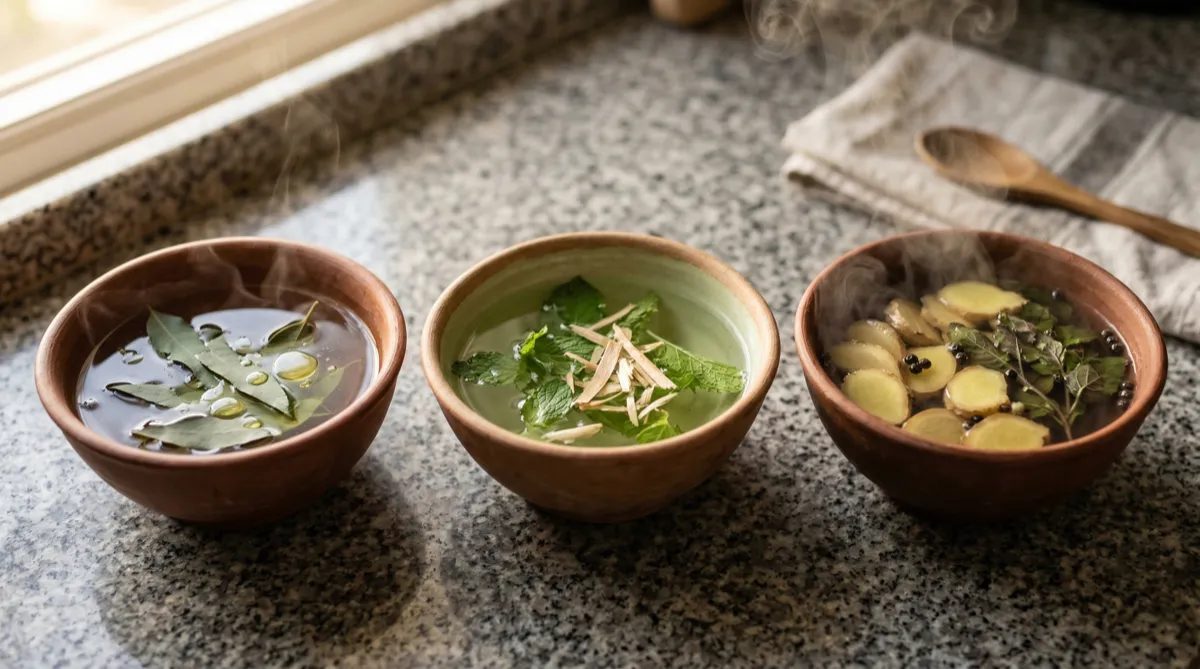
Here is something that reframes the entire way you think about breathing. A human being can survive 30 days without food, 3 days without water, but only about 3 minutes without breath. Yet of these three survival necessities, breath is the only one we have voluntary control over. You cannot consciously control your digestion or water absorption, but you can consciously alter the rate, depth, and pattern of your breathing. This is not an accident of biology. It is a control panel — the one point where conscious intention can directly influence the autonomic nervous system. Every yogic and Ayurvedic breathing practice is built on this single insight: breath is the bridge between the voluntary and involuntary systems of the body. When Charaka placed Pranavaha Srotas first among all channels, he was not ranking by anatomical importance. He was ranking by leverage — the channel through which a human being has the most direct capacity to influence their own physiology.
Tamaka Shwasa: The Classical Understanding of Breathing Difficulty
Among the five types of Shwasa (breathing difficulty) described in Charaka Samhita (Chikitsa Sthana, Chapter 17), Tamaka Shwasa is the most clinically significant for modern readers. The term “Tamaka” means “darkness” or “suffocation” — referring to the sensation of being engulfed in breathlessness.
Charaka describes Tamaka Shwasa with remarkable clinical precision: it is characterised by paroxysmal breathing difficulty (attacks that come and go), wheezing, chest tightness, cough with expectoration, and relief upon sitting up or in warm environments. The attacks tend to worsen at night and in cold or humid conditions. Sound familiar? Modern clinical descriptions of bronchial conditions read almost identically. The overlap is not coincidental — the classical physicians were observing the same condition with the same attention to clinical detail.
What makes the Ayurvedic framework distinctive is the explanation of why Tamaka Shwasa occurs. Charaka traces the pathogenesis to a specific sequence: Kapha accumulates in the stomach (Amashaya), then migrates upward into Pranavaha Srotas, obstructing the natural downward flow of Vata. Vata, unable to move downward, reverses direction (Pratiloma Gati) and forces itself upward, creating the characteristic gasping, wheezing, and sense of suffocation. The treatment logic follows directly: clear the Kapha obstruction, restore Vata's natural direction, and strengthen the Pranavaha Srotas against recurrence.
Charaka further distinguishes between Santamaka (manageable, responsive to treatment) and Pratamaka (severe, associated with fever and loss of consciousness). He also describes Tamaka Shwasa that improves in warm environments versus one that worsens in any extreme of temperature. This sub-classification, described over two millennia ago, shows a sophistication of clinical observation that rivals modern phenotyping approaches to the same conditions.
Did You Know?
Charaka Samhita describes five distinct types of Shwasa (breathing difficulty), but classifies only two — Maha Shwasa (great breathlessness, with loud, laboured breathing visible from a distance) and Urdhva Shwasa (upward breathlessness, where the patient gasps for air with an upward-tilted head and cannot exhale properly) — as Asadhya (incurable). The remaining three, including Tamaka Shwasa, are classified as Yapya (manageable) or Sadhya (responsive to intervention). This clinical prognostic framework — categorising conditions not only by symptoms but by expected outcome and treatability — represents a remarkably systematic approach to respiratory assessment that predates modern prognostic scoring systems by over two millennia.
Seasonal Vulnerability and Respiratory Wellness
One of Ayurveda's most practical contributions to respiratory health is the framework of Ritucharya — seasonal regimens designed to prevent disease before it arises. Respiratory conditions are among the most clearly seasonal of all ailments, and the classical texts explain exactly why.
During Hemanta and Shishira Ritu (winter), the body naturally accumulates Kapha as a protective response to cold. This is normal and even beneficial — the extra Kapha insulates, moisturises, and protects. But when Vasanta Ritu (spring) arrives and temperatures rise, this accumulated Kapha begins to liquefy and overflow. If the body’s Agni is strong enough to process this excess, it is eliminated without incident. If not, the liquefied Kapha floods the Srotas — particularly Pranavaha Srotas — producing the surge of respiratory complaints that people experience every spring. Seasonal patterns like these are predictable and, in the Ayurvedic view, entirely preventable.
This is why classical texts recommend specific dietary and lifestyle modifications during late winter and early spring to prevent respiratory issues: lighter meals to reduce Kapha accumulation, warm water instead of cold, avoidance of heavy and cold foods, regular physical exercise to mobilise stagnant Kapha, and specific daily practices that maintain the openness of Pranavaha Srotas. The approach is preventive, not reactive — addressing the seasonal physiology before symptoms appear.

The Ama Connection: Why Digestion Matters for Breathing
Perhaps the most counterintuitive aspect of the Ayurvedic approach to respiratory health is the emphasis on digestion. Modern patients seeking help for breathing problems rarely expect to be asked about their appetite, meal timing, or bowel habits. But in Ayurveda, the connection between Ama (metabolic residue) and respiratory health is direct and well-documented.
The mechanism, as described in classical texts, is straightforward: weak Agni produces Ama. Ama is heavy, sticky, and tends to accumulate. When it accumulates in the Amashaya (stomach), it provides a substrate for Kapha to cling to. The Kapha-Ama combination then migrates upward into the chest and respiratory passages. Charaka calls this Urdhvaga Kapha — Kapha that has moved upward from its natural seat. The respiratory congestion, excessive mucus production, and heaviness in the chest that follow are not primarily a lung problem — they are a digestive problem that has manifested in the respiratory system.
This explains a pattern that many people recognise from their own experience: respiratory symptoms that worsen after heavy meals, after dairy consumption, or during periods of digestive sluggishness. It also explains why fasting or eating very lightly often brings immediate respiratory relief — not because the lungs are magically affected by the absence of food, but because reducing the digestive burden reduces Ama production, which reduces the upward migration of Kapha into the respiratory passages.
The Ayurvedic Approach: Principles, Not Prescriptions
The classical Ayurvedic approach to respiratory wellness is built on clear principles that have remained consistent across texts and traditions for millennia. While specific formulations are always personalised based on individual assessment, the underlying logic is universal. If you are dealing with a persistent concern, our Long-Standing Concerns guide may be helpful.
Agni protection. The first principle is always to protect and strengthen digestive fire. Strong Agni prevents Ama formation, which prevents the Kapha-Ama migration that underlies most respiratory complaints. This is why dietary guidance — appropriate food choices, proper meal timing, warm and light eating during vulnerable seasons — is considered the foundation of respiratory health. A patient whose Agni is strong and well-regulated has inherently better respiratory resilience, regardless of environmental challenges.
Kapha management. Since Kapha is the dosha most directly involved in respiratory congestion, its intelligent management is central. This does not mean eliminating Kapha — that would be harmful, as Kapha provides essential lubrication and immune protection. It means preventing excessive accumulation through appropriate seasonal diet, regular exercise, and lifestyle practices that keep Kapha mobile rather than stagnant.
Srotas opening. Keeping the channels open and flowing is a core therapeutic goal. This is achieved through a combination of dietary practices, specific daily routines (the morning practices of Dinacharya include several that support respiratory channel health), appropriate physical activity, and, when needed, clinical interventions that a qualified practitioner determines through individual assessment.
Environmental awareness. Ayurveda pays extraordinary attention to the environment's effect on respiratory health. Cold, damp, dusty, smoky, or polluted environments are identified as direct aggravating factors. The classical recommendation to spend time in clean, warm, well-ventilated spaces — ideally with natural air movement — is as relevant now in India's polluted cities as it was when the texts were written. Classical texts also describe Dhupana (herbal fumigation) — the practice of exposing respiratory passages to therapeutic herbal smoke — as a method for purifying the air in a patient's environment and supporting the clearance of accumulated Kapha from the upper channels. Dhupana is one of the oldest documented environmental interventions for respiratory wellness, described in both Charaka Samhita and Sushruta Samhita as part of the broader management of respiratory conditions.
Vata direction restoration. Perhaps the most distinctive principle in the Ayurvedic respiratory framework is the emphasis on restoring the natural downward direction of Vata. When Vata reverses direction (Pratiloma Gati) — moving upward instead of downward — it creates the gasping, wheezing, and suffocation characteristic of severe respiratory disturbance. Classical treatment logic always addresses this directional reversal, not merely the symptoms it produces. Practices that support healthy downward movement of Apana Vayu, proper elimination, and the avoidance of urge suppression are all considered part of respiratory care for this reason.
Pranayama: Breath as Both Diagnosis and Therapy
No discussion of Ayurvedic respiratory health is complete without addressing Pranayama — the systematic practice of breath regulation. In Ayurveda and its sister science Yoga, Pranayama is not merely a relaxation technique. It is a therapeutic tool with specific, documented effects on Pranavaha Srotas.
The classical approach to Pranayama in the context of respiratory health is conservative and precise. Not all Pranayama techniques are appropriate for all respiratory conditions. Rapid, forceful techniques that are beneficial for healthy individuals with Kapha accumulation can be dangerous for someone with Vata-type dryness or Pitta-type inflammation. This is why classical texts consistently recommend that Pranayama for therapeutic purposes be learned under qualified guidance, not self-prescribed from books or videos.
The classical tradition broadly categorises breathing practices along doshic lines. For Vata-type respiratory patterns — characterised by dryness, anxiety, and irregular breathing — calming, grounding techniques are emphasised: slow, rhythmic breathing with gentle retention, practised in a warm and quiet environment, designed to steady the nervous system and restore Vata's natural downward flow. For Pitta-type patterns — marked by heat, inflammation, and irritability — cooling techniques are preferred: practices that emphasise long, smooth exhalation without forceful retention, intended to dissipate excess heat from the chest and calm Pitta's sharp quality. For Kapha-type patterns — involving heaviness, congestion, and sluggishness — more stimulating practices are appropriate: techniques involving vigorous exhalation and chest expansion that mobilise stagnant Kapha and invigorate Agni. This doshic matching of breath practice to individual constitution and current condition is fundamental to the classical approach, and it explains why a single Pranayama technique cannot serve everyone equally.
What is universally recommended across all classical traditions is the practice of slow, deep, diaphragmatic breathing — breathing that is unhurried, steady, and draws the breath deep into the lower lungs rather than shallow chest breathing. Modern research has extensively validated the physiological effects of this type of breathing: reduced cortisol, improved vagal tone, better oxygenation, reduced inflammatory markers, and improved immune function. These are exactly the effects the classical texts describe, using different terminology but observing the same outcomes.
What Current Evidence Says
Research into the gut-lung axis, published in journals including Nature Reviews Immunology and the European Respiratory Journal, has established that the gut microbiome directly influences respiratory immune responses. Gut-derived short-chain fatty acids modulate lung inflammation, and disruptions to gut health correlate with increased respiratory infections and allergic airway disease. This parallels the Ayurvedic observation that digestive health (Agni) directly affects Pranavaha Srotas function.
A 2020 systematic review in the Cochrane Database of Systematic Reviews found that breathing exercises (comparable to basic Pranayama) improved quality of life and reduced dyspnea in individuals with chronic obstructive breathing difficulties. Multiple randomised controlled trials have demonstrated that slow-breathing techniques improve lung function parameters, reduce inflammatory biomarkers, and enhance autonomic balance.
The Ministry of Ayush and CCRAS (Central Council for Research in Ayurvedic Sciences) have supported research into classical formulations and practices for respiratory wellness, with several studies published in peer-reviewed journals showing promising results for traditional approaches. However, large-scale clinical trials meeting international standards remain limited, and these findings should be considered preliminary evidence rather than definitive proof. The NCCIH (National Center for Complementary and Integrative Health) similarly notes that while traditional breathing practices show clinical benefit, more rigorous research is needed on specific Ayurvedic formulations.
This article is for educational purposes only and does not constitute medical advice. Respiratory symptoms — particularly sudden breathlessness, chest pain, persistent cough lasting more than three weeks, coughing blood, or breathing difficulty that worsens rapidly — require immediate medical evaluation. Chronic respiratory conditions should be managed in collaboration with qualified healthcare providers. Traditional Ayurvedic approaches should complement — not replace — conventional medical care. Any Ayurvedic support for respiratory concerns is always personalised based on individual assessment by a qualified practitioner.