
Vyadhikshamatva: The Ayurvedic Concept of Immunity
Your immune system does not work the way you think it does. Modern medicine frames it as an army: white blood cells are soldiers, pathogens are invaders, and immunity means winning the war. Ayurveda saw it completely differently — and the difference matters more than you might expect. The term is Vyadhikshamatva, found in Charaka Samhita (Sutra Sthana, Chapter 28) and elaborated by Sushruta (Sutra Sthana, Chapter 15). Vyadhi means disease. Kshamatva means the capacity to endure — or, more precisely, to forgive. Your body’s capacity to “forgive” disease-causing factors and keep its balance anyway. Not fighting, not destroying — maintaining equilibrium despite constant exposure. This is closer to what modern immunologists now call “immune tolerance” — the sophisticated ability to encounter a trigger without overreacting. And here is what should stop you mid-scroll: loss of immune tolerance is exactly what defines allergy. Every time you pop an antihistamine, you are chemically suppressing the overreaction. Ayurveda asks a different question entirely: why did your body lose its capacity to forgive in the first place?
Charaka describes three distinct levels of this resistance, each with different clinical implications. Sahaja Bala is innate, constitutional strength — the immunity you are born with, determined by the quality of your parents’ reproductive tissues, the conditions of conception, and your Prakriti (constitutional type). Some people are constitutionally robust. They rarely fall ill, recover quickly when they do, and tolerate environmental changes without difficulty. This is Sahaja — and while it cannot be fundamentally altered, it can be supported or undermined by how you live.
Kalaja Bala is time-dependent and seasonal strength — and this is where things get fascinating. Your immunity is not a fixed number. It fluctuates with the seasons, with your age, and even with the time of day. Ayurveda specifically flagged the junction between seasons (Ritu Sandhi) as the most vulnerable window — those two-week transition periods when one season ends and another begins. If you have ever noticed that you always catch a cold right when the weather shifts, you are experiencing Ritu Sandhi. The texts also noted that immunity dips in the afternoon and peaks in the early morning, which modern chronobiology has now confirmed through cytokine and cortisol rhythms. Understanding Kalaja Bala is not about worrying — it is about knowing when to be more careful.
Yuktikruta Bala is acquired strength — immunity built through deliberate effort. This is where Ayurveda becomes actionable. Through proper diet, appropriate exercise, adequate rest, seasonal routines, and specific Rasayana (rejuvenation) practices, immunity can be systematically built over time. Yuktikruta Bala is the domain of choice — the immunity you earn through how you live. It is also where most people have the greatest room for improvement.
At the centre of all three levels sits Ojas — the master substance of immunity in Ayurvedic physiology. Ojas is described as the finest essence produced by the sequential nourishment of all seven Dhatus (tissues), from Rasa (plasma) through Shukra (reproductive tissue). It takes approximately thirty days for food to be transformed through all seven tissue layers to produce Ojas. When Ojas is strong, immunity is robust, the mind is clear, the skin glows, and the person radiates a quality the texts call “Bala” — strength that is felt before it is measured. When Ojas is depleted, everything weakens: immunity, mental stability, emotional resilience, and the body’s capacity to resist any form of disease. For a deeper exploration of how Rasayana practices build Ojas, see our article on Rasayana and Rejuvenation.
Did You Know?
Sushruta Samhita (Sutra Sthana 21.18) observed that a person’s tolerance to environmental substances changes with seasons — what the body handles easily in one season triggers a reaction in the next. Modern immunology only confirmed this in 2016, when researchers at Yale found that the human immune system literally rewires itself with the seasons: over 4,000 genes in immune cells change their expression between winter and summer, including genes governing inflammatory and allergic responses. Your immune system in January is a biochemically different machine from your immune system in July. Ayurveda’s Ritucharya framework, which prescribes different food, activity, and daily routine for each season, was not folk wisdom about staying warm in winter. It was a practical response to the fact that immunity itself is seasonal — a discovery that took genomics to catch up with.
Why Allergies Happen: The Ama-Dosha Model
Picture this: you and your friend are sitting in the same park on the same March morning. Same trees, same breeze, same pollen count. She is fine — reading her book, unbothered. You are three sneezes in, eyes streaming, already calculating whether you took your Allegra this morning. Same air, same allergen, completely different bodies. Modern immunology calls this an “overreaction to harmless substances.” Which is accurate, but also a bit like saying a house fire is “an overreaction of combustible materials.” It describes the event without explaining why. Why is your system overreacting while hers is not? Why were you fine last year but miserable this year? And why — if you are being honest — did your digestion, sleep, and energy also go sideways around the same time your allergies flared up?
Ayurveda offers a model that addresses these questions directly. In the classical framework, allergies are not primarily about the allergen. They are about the internal terrain — specifically, the combination of Ama (metabolic toxins) and dosha sensitivity. When Agni (digestive fire) is weak, food is incompletely processed, leaving behind a sticky, heavy residue called Ama. This Ama circulates through the body, lodging in tissues and channels, creating a state of low-grade internal toxicity. When this Ama-laden system encounters a substance that aggravates the person’s dominant or sensitive dosha, the body overreacts. The allergen is the trigger, but Ama is the loaded gun. Without Ama accumulation, the same trigger would produce no reaction. This is why cleaning up digestion often reduces allergy severity even before any specific anti-allergy treatment.
The type of allergic reaction depends on which dosha is involved. Vata-type allergies manifest as dry cough, wheezing, variable symptoms that come and go unpredictably, sensitivity to cold and wind, bloating, and a general sense of being unsettled. The symptoms shift — present one day, absent the next, worse with cold weather, better with warmth. This variability is the hallmark of Vata involvement. The person often also reports anxiety, disturbed sleep, and dry skin alongside their allergic symptoms.
Pitta-type allergies are intense, acute, and inflammatory. Hives, skin rashes, burning eyes, inflamed nasal passages, acid reflux triggered by certain foods, and sharp headaches. The onset is typically sudden and the symptoms are hot, red, and angry. Pitta allergies often worsen in summer, with spicy food, with alcohol, and during periods of intense work or emotional frustration. The person frequently reports irritability and impatience alongside their allergic symptoms — because the same Pitta aggravation driving the allergy is also affecting their temperament.
Kapha-type allergies are the ones most people recognise as “classic” allergies: congestion, sinus pressure, thick mucus, heaviness in the head, water retention, lethargy, and a general feeling of being weighed down. Kapha allergies worsen in spring (when accumulated Kapha melts), with dairy, with cold and damp weather, and with sedentary living. This pattern is especially common in children, whose naturally Kapha-dominant constitutions make them prone to recurring congestion, colds, and mucus-heavy reactions. The person often reports weight gain, sluggish digestion, and a feeling of mental fog alongside the congestion — all expressions of the same Kapha excess.
Seasonal Allergies Through the Ritucharya Lens
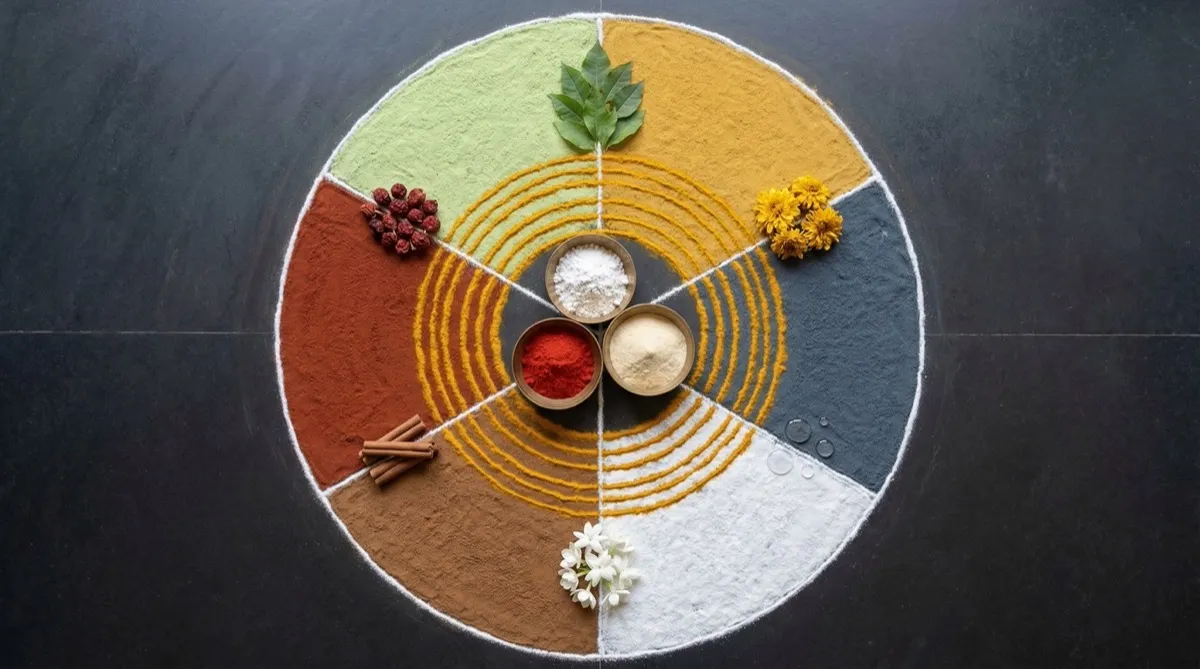
Here is a question that should bother you more than it does: if allergies are caused by pollen and dust, why do they follow a calendar? Why congestion every spring, skin reactions every summer, dry cough every autumn — like clockwork, year after year? Ayurveda mapped this pattern with uncomfortable precision in a framework called Ritucharya (seasonal routine), described across all three major classical texts. And the explanation is not what you expect. Your seasonal allergies are not caused by what is in the air right now. They are caused by what accumulated inside you during the previous season.
The logic is elegant and once you see it, you cannot unsee it. Each season naturally accumulates a specific dosha in the body. Winter accumulates Kapha — the cold, heavy, moist qualities of winter increase these same qualities in the body. When spring arrives and temperatures rise, this accumulated Kapha liquefies and begins to move. Think of snow melting — that is literally what is happening inside you. The result is what millions experience every spring: congestion, sinus drainage, mucus, heaviness, and the cluster of symptoms we call “spring allergies.” The pollen is real, but the reason your body overreacts to it is the Kapha that accumulated over winter and is now flooding your channels. This is why people who follow Ayurvedic seasonal eating — lighter, warmer, more pungent food in late winter — often report dramatically reduced spring allergies. They prevented the Kapha accumulation that would have made them reactive.
Summer accumulates Pitta. The heat, intensity, and sharpness of summer increase these same qualities internally. When Pitta reaches its peak in late summer, the body becomes reactive to anything that adds more heat: spicy food, direct sun, alcohol, emotional intensity. Summer allergies manifest as skin reactions — hives, rashes, sunburn sensitivity — and inflammatory conditions of the eyes, sinuses, and digestive tract. The allergic threshold drops because internal Pitta is already high, and any additional Pitta-aggravating input tips the system into overreaction.
Autumn accumulates Vata. As the weather turns dry, cold, and windy, these qualities increase in the body. Vata-type allergies — dry cough, throat sensitivity, wheezing, variable respiratory symptoms — peak in autumn. The mucous membranes dry out, losing their protective moisture barrier, and the body becomes hypersensitive to environmental irritants. The same dust that caused no reaction in humid summer now triggers coughing and wheezing in dry autumn, because the body’s Vata-driven dryness has reduced its tolerance.
The classical preventive approach is Ritucharya itself — adjusting diet, activity, and daily routine with each season to prevent the dosha accumulation that makes allergies possible. This is not reactive treatment. It is proactive prevention operating at the level of root cause. By the time you are sneezing, the accumulation happened weeks or months ago. Ritucharya addresses the accumulation phase, not the expression phase. This shift — from treating symptoms to preventing the conditions that create symptoms — is one of the most practically useful insights in all of Ayurvedic medicine.
Did You Know?
The human gut contains roughly 100 trillion microorganisms — ten times more cells than in the rest of your body combined. These gut bacteria produce over 30 neurotransmitters, including 95% of your body’s serotonin. In 2015, a landmark study in Cell discovered that germ-free mice (raised without gut bacteria) had profoundly dysfunctional immune systems that could not distinguish between harmless substances and genuine threats — they were, in effect, permanently “allergic” to everything. When gut bacteria were restored, immune tolerance returned within weeks. Ayurveda’s central claim — that Agni (digestive fire) is the foundation of immunity, and that Ama (the product of weak digestion) is the root cause of allergic sensitivity — is essentially a 2,000-year-old description of the microbiome-immune axis. The classical physicians did not know about bacteria. They did not need to. They observed the relationship between gut function and immune competence with such accuracy that the mechanism they described maps onto the microbiology almost exactly.

Here is something the body does that most people never suspect: it does not distinguish between a physical threat and a psychological one. A stressful thought — a looming deadline, a difficult conversation you are rehearsing, financial worry spinning at 2 AM — triggers the same inflammatory cascade as a bacterial infection. The same cytokines. The same cortisol surge. The same suppression of digestive and immune function. Your body responds to a worried mind the way it would respond to a wound — by diverting resources to survival mode and away from the nourishment, repair, and immune surveillance processes that keep allergies in check. This is not a metaphor. It is measurable, documented biology. And it explains something that puzzles many allergy sufferers: why their symptoms invariably worsen during stressful periods, even when their diet and environment have not changed. The allergen did not increase. The body’s capacity to tolerate it decreased — because psychological stress consumed the very resources that would have maintained immune tolerance.
Building Ojas: The Foundation of True Immunity
If Vyadhikshamatva is the concept and Ama is the loaded gun, then Ojas is the bulletproof vest. But here is what the wellness industry does not want you to know: you cannot buy Ojas. There is no Ojas pill, no Ojas powder, no Ojas subscription box. It must be built from the inside out, through the sequential, complete nourishment of all seven tissue layers, supported by strong Agni and a lifestyle that does not deplete faster than it replenishes. This is inconvenient. It is also the truth.
The process of Ojas production begins with what you eat and how well you digest it. When Agni is strong and food is appropriate, each tissue layer receives proper nourishment and passes its finest essence to the next layer. Rasa (plasma) nourishes Rakta (blood), which nourishes Mamsa (muscle), then Meda (fat), Asthi (bone), Majja (marrow), and finally Shukra (reproductive tissue). The supreme essence that remains after this entire cascade is Ojas. If Agni is weak at any stage, or if the raw materials are poor, or if the body is under excessive stress that diverts resources away from this nourishment cascade, Ojas production falters. This is why immunity cannot be built overnight. It is the end product of a process that takes weeks and depends on every upstream factor being in order.
What builds Ojas reads like a prescription for a balanced life. Sattvic diet — fresh, warm, seasonal, properly cooked food eaten in a calm state. Adequate sleep — the body performs its deepest tissue nourishment during sleep, and chronic sleep deprivation directly undermines Ojas production. Emotional balance — chronic anger, fear, grief, and anxiety consume Ojas through excessive mental and emotional expenditure. Appropriate exercise — enough to stimulate circulation and Agni, not so much that it depletes tissues. Positive relationships, meaningful work, time in nature, and a sense of purpose — these are not lifestyle luxuries. In the Ayurvedic framework, they are direct inputs to the substance that governs your immune competence.
What depletes Ojas is equally specific and equally relevant to modern life. Chronic stress is the primary Ojas depleter — it diverts the body’s resources from nourishment to survival mode, starving the tissue nourishment cascade. Poor sleep prevents the nourishment process from completing. Processed food provides calories without the life force (Prana) needed to produce Ojas. Excessive screen time and sensory overstimulation exhaust Prana Vata, which governs the entire nourishment process. Overwork — physical or mental — consumes more than the body can replenish. Fasting too aggressively or eating too little depletes the raw material. Excessive sexual activity depletes Shukra Dhatu, the final tissue from which Ojas is produced.
This is why the modern approach of “immune boosters” — a vitamin here, a supplement there, a superfood smoothie on weekends — misses the point so completely that it would be almost humorous if the consequences were not so serious. Immunity is not a switch you can flip with a product. It is the cumulative output of how you eat, sleep, digest, move, feel, and live over weeks and months. No supplement can compensate for chronic sleep deprivation, constant stress, poor digestion, and emotional turbulence. Ojas is built through lifestyle, not through purchases. This is inconvenient to hear in a consumer culture, but it is the truth that classical Ayurveda and modern psychoneuroimmunology both point toward.

Diet and Lifestyle for Immune Strength
Here is the part that frustrates people who want a quick fix and delights people who are tired of being sold one: the most effective immune-building strategies are not expensive, not exotic, and not complicated. They are the kind of unglamorous, consistent, season-appropriate choices that compound over time like interest in a savings account. No one writes breathless headlines about drinking warm water or going to bed on time. But if you talk to people who actually reduced their allergy load without medication, their stories sound remarkably similar: they changed how they ate, when they slept, and how they handled stress. Three months later, spring arrived and they barely noticed.
Warm, cooked, seasonal food forms the foundation. Cold, raw food — particularly in Kapha season (late winter and spring) — suppresses Agni and increases Ama formation. This does not mean raw food is always wrong. In Pitta season (summer), cooling foods are appropriate. But the default, especially for building immunity, is warm, cooked, and easy to digest. Include all six tastes (sweet, sour, salty, pungent, bitter, astringent) in your daily meals to ensure balanced dosha nourishment. A simple practice: warm water with a pinch of turmeric and a small amount of black pepper, taken in the morning, gently kindles Agni and supports the body’s natural cleansing processes. Turmeric milk at night — a kitchen staple across Indian households — has supported immune health for generations as a household practice, not a medical prescription. For a complete guide to structuring your day, see our article on Dinacharya: Daily Routine.
Warm water throughout the day is one of the simplest and most effective immune-supporting habits. It keeps Agni kindled, helps flush Ama, hydrates tissues without suppressing digestive fire (as cold water does), and supports the flow of nutrients through the Srotas (channels). This is not exotic advice. It is grandmother wisdom validated by the observation that people who drink warm water consistently tend to have fewer digestive complaints, clearer sinuses, and better overall vitality.
Regular Dinacharya (daily routine) is immunity medicine that costs nothing. Consistent wake and sleep times stabilise Vata, which governs the nervous system and immune coordination. Morning Abhyanga (self-massage with warm oil) nourishes tissues and calms the nervous system. Adequate sleep — seven to eight hours for most adults — is non-negotiable for Ojas production. Stress management through Pranayama, meditation, or simply regular time in nature reduces the cortisol burden that depletes immune resources. For seasonal immune support, periodic Langhana (light eating or gentle fasting) helps clear accumulated Ama without depleting tissues. This is not aggressive detoxing — it is simply eating lighter for a day or two, allowing Agni to process what has accumulated. See our Seasonal Wellness Calendar for timing guidance.
What you avoid matters as much as what you do. Avoid eating when not hungry — this is the single most common cause of Ama formation. Avoid combining incompatible foods (milk with sour fruits, fish with dairy, hot and cold foods in the same meal). Avoid eating late at night when Agni is naturally low. Avoid excessive cold drinks, which suppress Agni directly. Avoid eating under stress — the body cannot digest properly when the nervous system is in a reactive state. These are not restrictions. They are the conditions under which your digestive system actually works as designed. For a practical guide to putting these principles into daily practice, see our Diet and Lifestyle Guide.
Did You Know?
Charaka Samhita (Sutra Sthana 17.74–75) describes Ojas with eerie sensory precision: the colour of ghee, the taste of honey, the smell of roasted rice. He states it takes 30 days for food to complete its journey through all seven Dhatus and produce a single drop of this substance — meaning the immunity you have right now is actually the product of what you ate and how you lived an entire month ago. That allergy flare-up this week? Trace it back to your digestion, sleep, and stress four weeks earlier. But here is the part that should genuinely startle you: modern science discovered in 2019 that bone marrow (Majja Dhatu, the sixth tissue in Ayurveda’s cascade) stores “memory” immune cells that determine your future immune responses — meaning the tissue layer Ayurveda placed second-to-last in its nourishment hierarchy is, in fact, a central command post for acquired immunity. The seven-tissue sequence was not poetic metaphor. It was observational biology, mapped without microscopes, holding up under twenty-first-century scrutiny.
What Current Evidence Says
Psychoneuroimmunology — the study of how psychological processes affect the immune system — provides striking validation of the Ojas concept. Research consistently demonstrates that emotional state directly affects immune function: chronic stress suppresses natural killer cell activity, reduces antibody production, and impairs wound healing. The Ayurvedic observation that emotional balance is essential for immunity is not philosophical — it is a measurable, reproducible biological reality confirmed by decades of research at institutions including Ohio State, Carnegie Mellon, and UCLA.
The gut-immune connection has become one of the most significant findings in modern immunology. Approximately 70% of the immune system resides in the gut-associated lymphoid tissue (GALT). The composition of the gut microbiome directly influences immune tolerance, inflammatory responses, and the likelihood of allergic reactions. This parallels the Ayurvedic centrality of Agni — the idea that digestive health is the foundation of all other health, including immune competence. Research published in Nature Reviews Immunology and the Journal of Allergy and Clinical Immunology has demonstrated that gut microbiome disruption (dysbiosis) is a significant risk factor for allergic disease, lending scientific support to the Ama-allergy connection Ayurveda described.
Circadian rhythm and immunity is an emerging field that validates Ayurveda’s emphasis on Dinacharya. Studies published in Immunity and Nature Reviews Immunology show that immune cell trafficking, cytokine production, and inflammatory responses all follow circadian patterns. Disrupted circadian rhythms — from irregular sleep, shift work, or jet lag — measurably impair immune function. The Ayurvedic insistence on regular daily routine as immune medicine is consistent with this evidence. The NCCIH (National Center for Complementary and Integrative Health) under NIH notes growing evidence for mind-body practices including yoga, meditation, and dietary modifications in supporting immune health, while emphasising the need for continued research into specific mechanisms and long-term outcomes.
This article is for educational purposes only and does not constitute medical advice. If you are experiencing persistent or severe allergic reactions, consult a qualified healthcare provider. Serious allergic conditions including anaphylaxis require immediate medical attention. Ayurvedic consultation can complement your medical care by addressing underlying digestive and constitutional factors, but should not replace allergy testing, prescribed medication, or emergency treatment. Never stop prescribed antihistamines, corticosteroids, or other allergy medication without consulting your prescribing doctor.